One of the most important parts of a DIY MFA is putting together a reading list and working your way through it. A few weeks ago, I wrote about The Essentials (books about writing that I can’t do without). Now it’s time to look at the books that make up the rest of your reading list.
There are four types of books that should go on your list. Two of the categories revolve around your current writing project while the other two should be unrelated to your WIP. (For the purpose of giving a concrete example, I’m using an old WIP that’s currently on the back-burner.)
1) Competitive Books: In this category are books that I consider to be my WIP’s closest competition. In the case of the above WIP, this would mean books where one or more children either run away from home or go on a journey. (Examples: The Lightning Theif, The Wizard of Oz, Bud Not Buddy, From the Mixed-Up Files of Mrs. Basil E. Frankweiler, Alice in Wonderland.) The goal in reading books in this category is to know what’s out there and figure out how your WIP can stand out.
2) Informative Books: This category contains books that are similar in theme as my WIP but not necessarily in the same genre or age-group. In other words, this is where I put all the “road trip” books on my list (Travels with Charley, On the Road, Cold Mountain) as well as The Odyssey, The Aeneid and The Epic of Gilgamesh, which are the original “road trip” stories. The books in this category might not necessarily impact my WIP directly, but they should help inform my writing and expanded my vision. This is also where you put any books of research you need to read for your WIP.
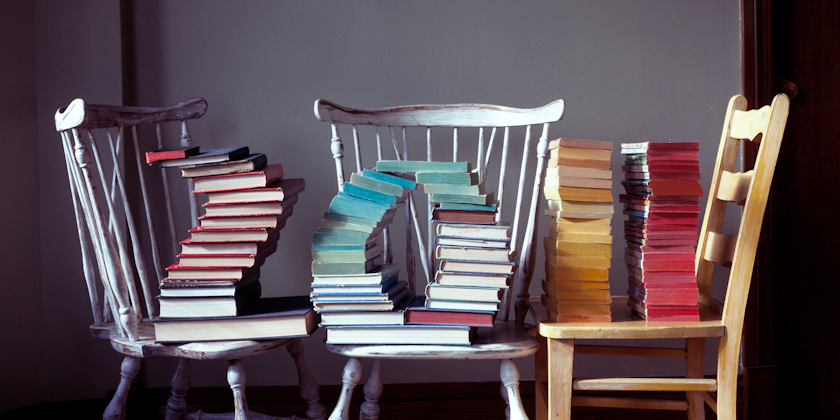
3) Contemporary Books: This category fluctuates more than any other because there’s always something new out that I’m dying to read. I have piles–literally piles–hiding in the corners of my room or under my futon. The point here is to be aware of what’s new in your genre and read a selection so that you know what’s out there and where the genre is going.
4) Literary Fiction or “The Classics”: Right now I’m focusing only on short fiction for adults and classic children’s books. For me, classic children’s books are ones that existed when I myself was a child (so figure 1990 or earlier). My goal in reading the classics is to build a solid repertoire so that when I start teaching later this month, I’ll have examples of different craft techniques ready on the tip of my brain. Even if I don’t use these books in my teaching, my hope is that they’ll make me a better reader.
As you can probably already tell, there’s a lot of overlap between the four categories, and that’s OK. The point is, in order to maximize your productivity don’t just read books willy-nilly, choose books that serve a concrete function for your goals.
Your task for today: This week, take some time to put together a reading list. Think about the next four months and figure out how many books would be reasonable to read during that time. Now go on Amazon or to a bookstore and start browsing.
Eventually, your goal for the day is to make a list, but it’s best to browse because some books might jump out at you that you wouldn’t have thought of otherwise. (Remember to browse outside your genre, too.) Try to include books in each of the four categories above, though it doesn’t have to be split evenly over all the categories. The idea is to find a balance of books relating to your WIP and books that will inform you as a reader.





 Call me Gabi (pronounced gah-BEE). I'm a writer, freelance teacher, and a lover of books and words. I'm also the instigator of DIY MFA. iggi's my sidekick, but he thinks he's the brains behind this operation.
 YA Cafe Update
 We’re All Winners
 YA Cafe: Why Do You Write YA?
 3 Things I Learned about Writing at Disney World