29 Apr

YA Cafe: 3 Tips for Capturing the Teen Voice

Posted in Literature, Reading, Teen Lit, YA Cafe

Welcome Back to YA Cafe, where book lovers can gather and chat about teen literature.  I’m your barista, along with Ghenet from All About Them Words.

Each Friday we pick from a menu of topics and share our thoughts on our respective blogs.  We’ve also got plans brewing for interviews, events and even some exciting giveaways, so stay tuned!  Join the discussion by responding in the comments, on your own blogs or on twitter using the hash tag #yacafe.

Today’s Special: What’s your favorite YA voice?

Just as I couldn’t decide on a favorite YA character, I also can’t pin down one YA voice that I love because there are so many good ones out there.  Instead, today I thought I’d talk about ways to capture that teen voice.  As many of you have said in the comments voice is one of the main things that differentiates teen literature from adult fiction.  Sure, there are other considerations (like the age of the main character) but voices is generally what makes YA stand out from other categories.

So how do you get that teen voice?  There are no hard and fast rules, but here are a few tips that have helped me nail down the voice of my own characters.

1. Listen to how teens talk.  Ever done that eavesdropping exercise where you go somewhere and listen in on people talking?  You can learn a lot about teen slang and the rhythm of how they speak just by listening.  Whenever I ride the subway or bus, the temptation is to zone out but listening to how teens talk can give you insight about your character’s voice.  (They say Nabokov nailed down the teen voice for Lolita by riding the TCAT bus in Ithaca and listening to local high school kids.)  When you listen–really listen–to teens talking, you’ll notice things: not just what they talk about but how they talk about it.  Here are a few examples:

     “Did she tell you we used to play checkers all the time, or anything?”
     “I don’t know.  For Chrissake, I only just met her,” Stradlater said.  He finished combing his goddam gorgeous hair.  He was putting away all his crumby toilet articles.
     “Listen.  Give her my regards, willya?”
     “Okay,” Stradlater said, but I know he probably wouldn’t.  You take a guy like Stradlater, they never give your regards to people.

J.D. Salinger, The Catcher in the Rye

     “Oh.”  Her voice was mock-pouty.  “Are you sure?  He’s no trouble.  He hardly takes up any room.  All you have to feed him is a Mini Wheat.  Or two grapes.  And he won’t poop on your rug.  Will you Cinnamon?  Go ahead, stand up and tell him you won’t.  Stand up, Cinnamon.”
     Cinnamon stood on my sneaker.  His eyes shone like black pearls.
     “Doesn’t he have the cutest ears?”
     Who notices a rat’s ears?  I looked.  She was right.  “Yeah,” I said, “I guess he does.”

Jerry Spinelli, Stargirl

2. Don’t be afraid to add imagery.  Just because the voice captures the way teens speak doesn’t make it any less sophisticated in terms of imagery and language than adult fiction.  Teens respond to beautiful imagery, as long as the language fits the style of the voice.  Don’t be afraid to use metaphors or similes either, if it fits the voice you’re going for.  Some examples:

     Cassie killed the snowmobile engine.
     Total silence, her favorite sound.  Ice crystals sun in the Arctic air.  Sparkling in the predawn light, they looked like diamond dust.  Beneath her ice-encrusted face mask, she smiled.  She loved this: just her, the ice, and the bear.

Sarah Beth Durst, ICE

     Then the worst thing happened.  A boy noticed me.
     He was the most unattractive boy in the room, a dog-face, a Poindexter, the one who hadn’t asked any girl to dance, because he knew that no girl wanted him to.  But I was a stranger so he figured, why not?

Judy Blundell, What I Saw and How I Lied

3. It’s OK to break the rules.  Some YA novels do a great job capturing not only the voice, but the vernacular of teen speech.  To write in vernacular, not only must the author have a great ear for dialogue, but depending on who’s narrating the story, the vernacular can carry over into the narration as well.  In Coe Booth example below, the vernacular is not over-powering, but it’s carried through out the book both in the narration and dialogue.  Even just a touch of vernacular in this book gives us a better look into the protagonist’s world than if the book had been narrated in standard English.  In the M.T. Anderson, the vernacular is completely made up, invented by the author for this futuristic society, but it fits the characters and gives us an idea of what this society is like.

     I mean, she the one that called my cell this morning and told me she needed to talk.  Then all the way to her place it’s like she wanna say something but don’t know how to tell me.  Se we just walk without saying a whole lot, which is alright ’cause I got a lot on my mind anyway.

Coe Booth, Tyrell

     Everything at home was boring.  Link Arwaker was like, “I’m so null,” and Marty was all, “I’m null too, unit,” but I mean we were all pretty null because for the last like hour we’d bee playing with three uninsulated wires that were coming out of the wall.  We were trying to ride shocks off them.  So Marty told us there was this fun place for lo-grav on the moon.

M.T. Anderson, Feed

Now I want to know, what’s your favorite YA voice?

Want to hear more about voice?  Fellow barista, Ghenet shares her thoughts on her blog: All About Them Words.  Check it out, then tell us what you think!

4 Comments »

22 Apr

YA Cafe: 5 Essentials For a Story Starter

Posted in Kid Lit, Literature, Reading, Teen Lit, YA Cafe

Welcome Back to YA Cafe, where book lovers can gather and chat about teen literature.  I’m your barista, along with Ghenet from All About Them Words.

Each Friday we pick from a menu of topics and share our thoughts on our respective blogs.  We’ve also got plans brewing for interviews, events and even some exciting giveaways, so stay tuned!  Join the discussion by responding in the comments, on your own blogs or on twitter using the hash tag #yacafe.

Today’s Special: What makes for a successful story starter?

Starting a novel or short story is like making a promise to the reader.  You set up rules and expectations that your readers will rely on as they read your piece.  Specifically, there are five things that you should establish early on in your story to gain the reader’s trust.  Delaying or changing these elements on your reader will create tension and while that might get the reader’s attention, it will also mean you’ll have to work that much harder to gain back the reader’s trust during the rest of the story.

5 Essential Things You Promise to Your Reader:

1) You promise a character.
From the get-go your readers will want to know who they’re supposed to root for.  Sometimes writers will artfully delay the appearance of the main character in order to create anticipation or to reflect the character’s personality, but this is very unusual.  In most cases, the protagonist usually appears in the first chapter, and is often the very first character the reader sees.

A great example of a delayed main character from children’s literature is The Wainscott Weasel by Tor Seidler, in which the protagonist does not appear at all in the first chapter.  (OK, this example isn’t YA, but it’s such a great example, I couldn’t resist.)  Another example, of course, is Pride and Prejudice by Jane Austen, in which Elizabeth’s ultimate love interest–Mr. Darcy–doesn’t appear until well into the story.  In the case of both books, these characters are introverted and shy.  By holding the characters back and making the reader wait for them, the authors show us this facet of their personalities.

2) You promise the voice.
The voice of the narration is central to establishing the mood of the story.  Compare the opening sentences to the following novels and notice the different moods that they convey.

“Everyone thinks it was because of the snow.  And in a way, I suppose that’s true.”
                  ~Gayle Forman, If I Stay
“We went to the moon to have fun, but the moon turned out to totally suck.”
                  ~M.T. Anderson, Feed
“If you really want to hear about it, the first thing you’ll probably want to know is where I was born, and what my lousy childhood was like, and how my parents were occupied and all before they had me, and all that David Copperfield kind of crap, but I don’t feel like going into it, if you want to know the truth.”
                  ~J.D. Salinger, The Catcher in the Rye

Point of view (POV) is also central to the voice and mood.  Notice that in the three above examples, all of the narrators were in the first person, which allows us to hear the character’s voice.  There are other scenarios where the narrator is not the protagonist, but the voice of the protagonist still comes through loud and clear in dialogue.

3) You promise the world.
Promise the world?  As in the whole world?  It might sound huge but it’s not just any world you’re promising, it’s your world.  It’s the world of your book.  It doesn’t matter what genre you’re writing either.  Whether you’re writing contemporary YA set in a regular suburb, or some elaborate fantasy story set in another world, you have to let your reader into that world and it must feel real.

4) You promise a problem.
From minute one, your reader has to know that there’s a problem the character is facing.  Whether that problem is explicit (like the family’s financial state in Pride and Prejudice) or a mystery (like in If I Stay) we know from the first moment that the character is facing some difficulty, some problem.  This promise is essential because whatever this problem is, it will be crucial in establishing the central conflict for your story.

5) You promise an event.
Every book opens with some sort of event that kick-starts the story.  In If I Stay, the event is huge and turns the characters’ lives upside-down (not gonna say what it is, in case any of you reader-friends haven’t read it yet).  In Catcher in the Rye, Holden leaves boarding school and that sets off the chain of events that is the story.  In Feed, we start by going to the moon to have fun and the story unravels from there.  Whether the event simply nudges the story into motion or gives it a sharp shove, there must be an event early on that gets the story started.  Your reader will be waiting for that event, so you will need to deliver.  Try not to delay it for too long.

What do you think?  Any promises I missed and any you’d like to add? 

Want to hear more about YA story starters?  Fellow barista, Ghenet shares her thoughts on her blog: All About Them Words.  Check it out, then tell us what you think!

8 Comments »

08 Apr

YA Cafe: 5 Reasons Your YA Character Might Flop

Posted in Character, Reading, Teen Lit, YA Cafe

Welcome Back to YA Cafe, where book lovers can gather and chat about teen literature.  I’m your barista, along with Ghenet from All About Them Words.

Each Friday we pick from a menu of topics and share our thoughts on our respective blogs.  We’ve also got plans brewing for interviews, events and even some exciting giveaways, so stay tuned!  Join the discussion by responding in the comments, on your own blogs or on twitter using the hash tag #yacafe.

Today’s Special: What are your favorite characters in teen literature?

The truth is, I don’t really have a favorite character in teen literature, but I have lots of characters I dislike.  Some I even hate.  Like Holden Caulfield, Alaska from Looking for Alaska, and Harry Potter (especially in book V but, pretty much throughout the latter half of the series).  These characters got me to thinking, what makes me like YA characters or hate them?  And if a character doesn’t work, what’s the reason behind it.

Your YA Character May Flop Because He/She is…

1) Pathologically Self-Centered.  OK, let me start by saying that everybody is at least a little bit egocentric; that’s normal.  What’s not normal is when a character is so pathologically self-centered that he or she doesn’t care about anyone else.  At all.  Not even a little bit.  Take Alaska from Looking for Alaska: she’s so wrapped up in this persona of “traumatized-and-depressed teen” that she couldn’t care less how her actions affect the people who care about her.  Of course, her quirkiness makes her endearing at times so that’s her saving grace.  But if you really want to make your character the worst YA character ever, you need to make sure he has no endearing qualities whatsoever.

2) Pathologically Quirky.  More than the egocentric protagonist, one type of character I detest is the I’m-so-unbelievably-quirky-even-I-can’t-stand-it character.  A mild form of this character is Stargirl, who is quirky in a charming, funny way.  But if you push this quirkiness too far, you end up having a character who’s annoying and just plain weird.  And seriously, if your character’s in high school–don’t you think she has enough problems already? 

3) Pathologically Stupid.  Some characters have plenty of good things going for them, but they are in the habit of making one bad decision after another.  Good ol’ Harry Potter falls into this category (though despite his lack of sense, he still seems to come out on top and that makes him all the more infuriating).  My favorite Harry Potter moment happens in the first book when Neville Longbottom earns the winning points for Gryffindor by standing up to Harry and his buddies for breaking the rules.  If you want your character to annoy the living daylights out of your reader have your protagonist always make bad decisions, then make everything turn out OK for him anyway.  It’ll drive your readers nuts.

4) Pathologically Whiny and Self-Righteous.  With this rule we return to my favorite least-favorite character: Holden Caulfield from The Catcher in the Rye.  He whines from the moment the book starts to the very last scene.  He believes he’s entitled to whatever he wants.  He thinks he’s SO above everyone around him.  *rolls eyes*  As if.  Self-righteous characters who think they’re so much better than everyone else are easy to hate.  Add a dash of whiny entitlement and you’ll have a thoroughly despicable character in the making.

5) Not A Teen.  That’s right.  If you want your book to have the worst YA character of all time, you need to make the protagonist not be a teenager.  Try writing a YA novel about an eleven-year-old.  Or maybe a twenty-something frat boy.  Because teens just love to read about middle schoolers almost as much as they’re dying read about adults (if you could call a twenty-something frat boy an “adult” but that’s beside the point.)  While there are many crossover books that are originally marketed to adults but have teen protagonists, I am hard-pressed to think of one truly-YA (i.e. not crossover) book with a protagonist younger than thirteen or older than eighteen.

What do you think?  What other reasons are there for YA characters that just don’t work?  Tell me because I’m dying to know.  Especially since I want to make sure my main character doesn’t reek of awfulness.  (Yes, I know it’s an ulterior motive, but help a girl out, ‘k?)

Want to read a post that’s actually about favorite YA characters?  Fellow barista, Ghenet shares her favorites on her blog: All About Them Words.  Check it out, then tell us who your favorite characters are!

Also, the winner of last week’s contest (for a signed copy of BITTEN by R.L. Stine) is K.V. Briar!  Congratulations!  *throws confetti*  Thank you to all who entered the contest.  K.V., please email me at iggiNgabi[at]gmail[dot]com with your address so I can mail you your prize.  

11 Comments »

25 Mar

YA Cafe: 5 Ways Romance Can Enhance a Story

Posted in Literature, Reading, Teen Lit, YA Cafe

Welcome Back to YA Cafe, where book lovers can gather and chat about teen literature.  I’m your barista, along with Ghenet from All About Them Words.

Each Friday we pick from a menu of topics and share our thoughts on our respective blogs.  We’ve also got plans brewing for interviews, events and even some exciting giveaways, so stay tuned!  Join the discussion by responding in the comments, on your own blogs or on twitter using the hash tag #yacafe.

Today’s Special:  Why does romance matter in YA?

5 Ways that Romance can Enhance a Story (YA, or not):

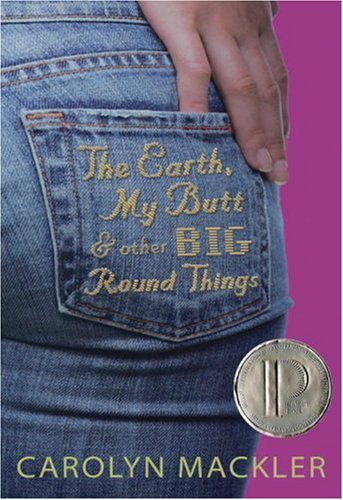
1) It creates conflict.  From Judy Blume to Carolyn Mackler, authors know that adding a romantic interest to a story is a great way to add conflict.  Even if the story itself is not about the romance, having romantic tension can add an element of conflict to the plot.  Take Mackler’s The Earth, My Butt and Other Big Round Things for example.  In this book, the main issue revolves around the protagonist’s self-image and her relationship to her family, but her tension with “the boy” helps add an extra conflict.

2) It offsets violence or sadness.  In books where violence (The Hunger Games) or sadness (If I Stay) are central to the story, having a romantic element brings in a breath of fresh air amidst the pain.  In The Hunger Games moments between Peeta and Katniss give the reader a little break from the constant chaos of the violence.  In If I Stay, the deep sorrow that fills the book is offset by happier flashback moments between the protagonist and her boyfriend.

3) It raises the stakes.  Again, The Hunger Games is a perfect example.  Until Peeta declares his love for Katniss, the main conflict in the story is “Will Katniss win the Hunger Games and survive?”  But the minute we start liking Peeta and we realize that he’s willing to sacrifice himself for Katniss, the stakes get higher.  According to the rules, there can’t be two winners in the games, so for Katniss to survive Peeta will have to die.  Voila!  Higher stakes.

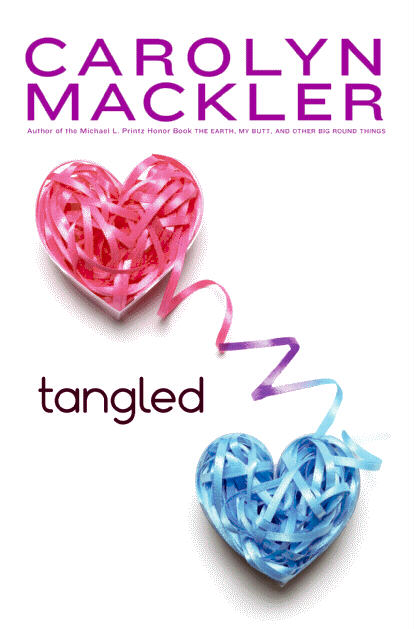
4) It helps make less sympathetic characters sympathetic.  This one was tough to find examples to illustrate, but Dakota in Tangled is a good example.  When we first meet him, he seems cruel and manipulative but as the story develops, we learn details about his romantic life that explain his manipulate behavior.  His budding relationship with a new woman adds depth to his character and makes him more sympathetic.

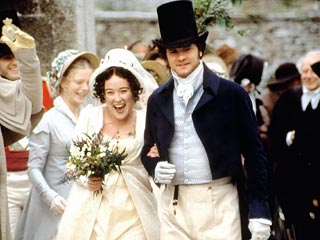
5) Even if we know how it will turn out, we still keep reading.  I call this the Pride and Prejudice effect.  Sure, we know almost immediately that Lizzy and Darcy will end up together, but we keep reading.  The interest isn’t in what will happen, but how.  Unlike any other element or genre in literature, romance is the only one that can be completely predictable and yet will still keep us reading.

Want to read more about romance?  Fellow barista, Ghenet shares her thoughts on her blog: All About Them Words.  Check it out, then tell us why romance in YA matters to you.

6 Comments »

Iggi & Gabi - All rights reserved © 2010-2011

I am a HowJoyful Design by Joy Kelley