18 Mar

YA Cafe: Searching for Short Stories

Posted in Reading, Teen Lit, YA Cafe

Welcome Back to YA Cafe, where book lovers can gather and chat about teen literature.  I’m your barista, along with Ghenet from All About Them Words.

Each Friday we pick from a menu of topics and share our thoughts on our respective blogs.  We’ve also got plans brewing for interviews, events and even some exciting giveaways, so stay tuned!  Join the discussion by responding in the comments, on your own blogs or on twitter using the hash tag #yacafe.

 Today’s Special:  Short Stories for Teens

I love short stories.  I use them for teaching and I also like reading them for fun.  Part of why I like them so much is that you get a whole story–beginning, middle and end–in one small package.  You can read the whole thing in one sitting and don’t have to wait until next time to find out what happens.  For someone like me who reads book endings compulsively, short stories are the perfect solution.

The only problem is, it’s nearly impossible to find short stories written for teens because there are very few venues that publish them.  I have managed to find a few anthologies especially for teen literature.  Here are some of the ones I’ve read recently.

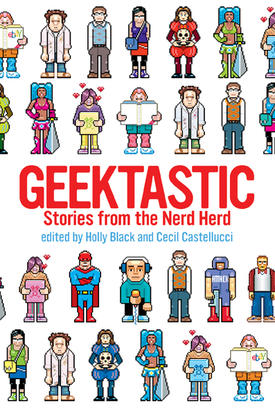
Geektastic (edited by Holly Black and Cecil Castellucci): This is one of my all-time favorites.  In this anthology, YA greats (Libba Bray, Bary Lyga, Sara Zarr, M.T. Anderson and David Levithan, just to name a few) share stories about various areas of geekdom.  From trekkies  to gamers to theater geeks, this anthology is one delicious collection of all things geeky.

Zombies vs. Unicorns (edited by Holly Black and Justine Larbalestier): This book attempts to answer that all-important question: which is cooler, zombies or unicorns?  Personally, I’m on team unicorn because animals that fart rainbows amuse me.  What about you, are you team zombie or team unicorn?

Love is Hell: Part of the same series as “Prom Nights from Hell” and “Vacations from Hell,” this collection has stories by five well-known YA authors that each give a paranormal twist to the typical YA romance.  Not as entertaining as Geektastic or Zombies vs. Unicorns but still fun, in that guilty pleasure sort of way.  I read this book on the beach; it’s the perfect beach read.

But never fear, there are more places where you can find great teen literature and Ghenet will be telling you about one of the coolest ones on her blog.  So zoom over there right now and read all about it!

Want to hear more about the AWESOME that’s happening in teen literature?  Fellow barista, Ghenet gives the details on her blog: All About Them Words.  Check it out, then tell us places where you’ve discovered short stories for teens.

4 Comments »

11 Mar

YA Cafe: Adventures in Dystopia

Posted in Reading, Teen Lit, YA Cafe

Welcome Back to YA Cafe, where book lovers can gather and chat about teen literature.  I’m your barista, along with Ghenet from All About Them Words.

Each Friday we pick from a menu of topics and share our thoughts on our respective blogs.  We’ve also got plans brewing for interviews, events and even some exciting giveaways, so stay tuned!  Join the discussion by responding in the comments, on your own blogs or on twitter using the hash tag #yacafe.

 Today’s Special:  Why do we love dystopian Teen Literature?

I’m probably going to get in trouble for saying this but I don’t watch the news.  I don’t read the newspaper and the only type of online news that I follow is stuff that pertains to writing and literature.  Because that’s what I like to read: books.  In an ideal world, I would live somewhere where I could get my news and current events from novels rather than periodicals, television or the internet.  This is why I love dystopian teen literature.

Gabi’s Top Five Countdown: Why Dystopian YA is So Much Better than Watching the News

5)  It talks about real issues in a non-boring way.  Let’s face it, political issues and current events can be a bit dry sometimes, but dystopian literature takes those same ideas and talks about them in a way that makes me not want to fall asleep.  I’d much rather read The Hunger Games than an editorial rant on why reality television’s all that is evil in our society.  And M.T. Anderson’s Feed is almost scary in how well it predicts that technology is taking over our culture.  I love dystopian YA because it gets teens (and adults!) to think about important issues without boring everyone to tears.

4)  There can be violence but in reality, no one gets hurt.  I’ll admit it, I like a good fight scene when I read dystopian literature.  Still, there is something comforting in knowing that when I put the book down, no humans or animals were actually harmed in the making of that story.  It shocks me how we can watch violence on the news, then change the channel or shrug it off, like it’s scenes from some action movie.  It’s not.  People are getting hurt for real.  Maybe I’m crazy, but the news should not be “entertainment.”  This is one of the reasons why The Hunger Games really spoke to me.  It’s a great commentary about how we allow grim realities of war and violence become “entertainment” on the news.

3)  There’s love.  I love that almost every dystopian YA book boils down to the notion: “The world sucks.  Let’s make out.”  There are all these terrible things going on in these dystopian worlds and yet these teen protagonists are still real teens.  The world might be falling apart, but they still care whether the person they’re crushing on likes them back.  Even in books where there isn’t a strong romantic thread, there’s still some deep and caring relationship that propels the story and gives the protagonist hope.  Which brings me to reason #2.

2)  There’s hope.  No matter how bad things get in dystopia, the characters always manage to find hope.  Protagonists in dystopian novels are probably the most optimistic people in the universe because even though their world is unthinkably awful, they still hope things will get better.

1)  You know when you’re being lied to.  Dystopian YA literature doesn’t pretend it’s telling us real facts.  It’s perfectly clear the moment you pick up The Hunger Games or Matched that the place you’re reading about isn’t actually real.  These days, reports and footage get chopped up and edited so that they tell the “right story” and give the news the right spin.  It’s hard to know who to trust.

I’m not saying every single news channel or newspaper is out to distort and manipulate our minds, but I do think that we all need to have a healthy dose of skepticism about what we believe at face value.  With dystopian literature, we know from the get-go that it’s not real; there’s no pretense of reality.  And I find that rather refreshing.

Want to hear more about dystopian teen literature?  Fellow barista, Ghenet shares her thoughts on her blog: All About Them Words.  Check it out, then tell us what you love about dystopian YA!

4 Comments »

05 Mar

YA Cafe: Cover Love

Posted in Literature, Teen Lit, YA Cafe

Welcome Back to YA Cafe, where book lovers can gather and chat about teen literature.  I’m your barista, along with Ghenet from All About Them Words.

Each Friday (Saturday this week, sorry!) we pick from a menu of topics and share our thoughts on our respective blogs.  We’ve also got plans brewing for interviews, events and even some exciting giveaways, so stay tuned!  Join the discussion by responding in the comments, on your own blogs or on twitter using the hash tag #yacafe.

Today’s Special:  What covers do you love?

I’ll admit it, I’m quick to judge a book by its cover.  If a book looks cheesy or too “teeny-boppery” from the cover, I’m likely to set it back on the shelf.  I like high-concept covers.  You know, covers that capture what the book is about without spelling it out completely.  I love when designers use type in a clever way or play with photography.  Not to mention, I love book covers that I can read on the subway without people wondering “why is she reading that weird book?”

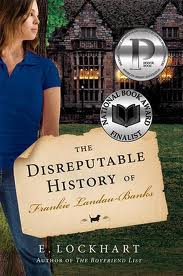
But enough about what types of covers I love; today I’m going to talk about something I don’t love.  I profoundly dislike it–dare I say, hate?–when perfectly good hardcover designs get replaced with schmaltzy paperback designs.  Here’s what I mean: (hardcovers on the left, paperbacks on the right).

Isn’t this hardcover gorgeous?  It makes me just want to peel that wax seal open and read the book.  Also, small details on the cover link to elements of the story.  (That basset hound embossed in the seal is there for a reason.)  As the I read the story, I was delighted to notice the significance of these details.

Now check out the paperback redesign.  It looks so blah, so generic compared to the hardcover.  Sure, it’s got those shiny award stickers on it, but couldn’t they have put the stickers on the original and still used that design?  Not to mention, talk about a cluttered design.  I am not a fan.

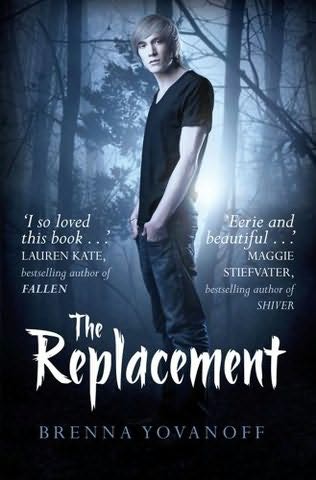
Lest you think the only reason I dislike some covers is because they have people on them, here’s an example of a hardcover-paperback pair where both show a person (in this case the protagonist).  One works for me, one doesn’t.  Take a wild guess which is which.

What I don’t like about the paperback is that we see a bit of the character’s face and hair.  It leaves less room for the reader to imagine what that character looks like than does the hardcover.  The hardcover, on the other hand, gives us some hints but doesn’t show us the character’s face so a lot is still left to the imagination.

In terms of layout, the hardcover is a much cleaner, tighter design.  You can barely read the title on the paperback cover and the author’s name practically disappears.  I might be going out on a limb here, but isn’t the whole point of the cover for readers to be able to recognize the book?  If so, wouldn’t it be crucial for the title and author’s name to be readable?

Of the covers I’m discussing today, this is the only one where I haven’t read the book yet.  If I saw these two covers on the shelf side-by-side, I would definitely reach for the hardcover and wouldn’t even look twice at the paperback.  I mean, how unbelievable is that hardcover?  It’s so disturbing and haunting and shows me what the book is about without telling the whole story.  It’s deliciously creepy!

The paper back, on the other hand… um, seriously?  I don’t even know what to say because this cover is so opposite to the essence and core of the hardcover.  All I know is that this looks generic and cheesy; this cover has no personality whatsoever.  I actually had to double-check to make sure these were covers for the same book because when I first saw them, I thought they couldn’t possibly be telling the same story.

In the end, I don’t understand why publishers feel they have to change these gorgeous hardcovers and replace them with generic-looking mass-market-y designs.  Wouldn’t it be an added cost to redesign a cover?  (i.e. Investing more designer hours into the project, not to mention a possible photo shoot for new cover images.)  If they already have a beautiful cover that works, why redesign it to make it uglier and less appealing?  Or maybe these redesigns do have some appeal to teens–though I doubt it because teens are generally way smarter than adults and they wouldn’t fall for gimmicky bells and whistles like these.  I’m really perplexed about this, so someone please explain it to me because I just don’t understand.

Still craving more YA-licious book covers?  Fellow barista, Ghenet shares her thoughts on her blog: All About Them Words.  Check it out, then tell us what covers you love!

8 Comments »

25 Feb

YA Cafe: Separation Anxiety

Posted in Literature, Reading, Teen Lit, YA Cafe

Welcome Back to YA Cafe, where book lovers can gather and chat about teen literature.  I’m your barista, along with Ghenet from All About Them Words.

Each Friday we pick from a menu of topics and share our thoughts on our respective blogs.  We’ve also got plans brewing for interviews, events and even some exciting giveaways, so stay tuned!  Join the discussion by responding in the comments, on your own blogs or on twitter using the hash tag #yacafe.

Today’s Special is: Why Contemporary YA Rocks!

Have you been in a Barnes & Noble store lately?  A few months ago, I was browsing my favorite section (teen, duh) and was stunned to discover that they had re-shelved the books into new sub-genres.  There was one huge shelf for Teen Paranormal Romance, one for Teen Fantasy and Adventure and one shelf labeled Teen, which I’m assuming was supposed to house “everything else.”

Am I the only person in the world who is horrified by this idea?

For starters, I have serious doubts about separating teen literature from the general fiction section because this type of division does nothing more than imply value judgments as to some books being “real literature” and some being “just for teens.”  Not to mention that there are so many books that cross the teen-adult barrier, it’s hard to know what to do with these books.  Do we shelve them in both sections?  Make an executive decision?  There are some countries where teen literature and adult literature are shelved together and it seems to work just fine.  What is it with our American culture that makes us want to quarantine teen literature in its own special section?

And now, the largest book chain is also dividing teen literature according to sub-genres.  I suppose I can see the sales motivation behind this idea.  Paranormal romance and teen fantasy are really hot right now, so why not make it easy for teens to find the books they really want to read, right?

Wrong.

When all sub-genres of Teen Fiction were shelved together, there was a good chance that readers looking for some paranormal teen stuff would also come across a “quieter” contemporary book or something historical.  Maybe a reluctant reader who fell in love with books because of Stephanie Meyer’s Twilight Saga, will discover Carolyn Mackler’s books (for instance The Earth, My Butt, and Other Big Round Things).  These books are also about teens and romance, and would be shelved right nearby to boot.

It also goes both ways.  Just like a fantasy-reader might pick up a piece of contemporary YA because it’s right next to Twilight on the shelf, there may also be a teen who reads only contemporary YA but would be drawn to a work of fantasy while browsing.  But now that the books are separated by genre in the teen section, the likelihood of that happening are next to nil.

And while I love fantasy and dystopian YA and even some paranormal romance, I also believe we have to respect the contemporaries.  These books show us life as it is in the here and now.  The stories aren’t set in some crazy futuristic world and people don’t have magic powers.  In fact, the magic of contemporary YA comes from seeing ourselves (or our teen selves) in the stories.

In the end, separating genres within the teen section seems ridiculous to me.  In fact, it seems almost dangerous.  Personally, I don’t believe in separating books by genre or age-group.  Who’s to say that some books are for kids of one age and not for kids of another?  The minute you start separating books or limiting access to certain books, you’re only a small step away from banning them altogether.

This is why, in my new home, I have decided to shelve all works of fiction and narrative non-fiction (from all genres and age groups) mixed together.  I’ve alphabetized by author’s last name, but that is for pragmatic reasons only (so I can actually find the books I’m looking for without having to tear apart the whole house).  I have E. B. White’s Charlotte’s Web right next to Walt Whitman’s Leaves of Grass.  I have Virgil (translations and original Latin text) on the shelf next to Rachel Vail’s Brilliant.

By putting all my books of all genres together, I like to think I’m taking one tiny step toward conceptualizing genres as equal, rather than “separate but equal.” (Based on history, we all know how well “separate but equal” turned out in the past.  Why, oh why can’t we humans ever learn?)  OK, so I may not be able change the world with one bookshelf, but it’s a start.

What do you think?  Should books be separated by genre or age group?

Still craving more jolts of YA-licious java?  Fellow barista, Ghenet shares her thoughts on her blog: All About Them Words.  Check it out, then tell us why you love contemporary YA!

BONUS!  To celebrate today’s topic we’re giving away a signed copy of a seriously awesome piece of contemporary YA literature: Sara Zarr’s Story of a Girl.  Ghenet and I got a chance to meet Sara Zarr at the SCBWI conference and she was so inspiring.  Here’s a picture of us with her:


Details about the contest…

 All you have to do to enter the contest is fill out the form either below.  You’ll get extra entries for leaving comments here or on About Them Words.  Deadline is next Wednesday, March 2nd at 11:59PM EST. We’ll announce the winner in next week’s YA Cafe post. Good luck!
 

3 Comments »

Iggi & Gabi - All rights reserved © 2010-2011

I am a HowJoyful Design by Joy Kelley