16 Oct

Love of Literature Check-In

Posted in DIY MFA, Literature

Happy Weekend, everyone!

Today I thought I’d do a Love of Literature check-in post to see how everyone’s doing with their DIY MFA literature study.

What’s on the bedside table?  What are you reading these days?  Right now, I’m flying through a bunch of verse novels: Make Lemonade by Virginia Euwer Wolff, and Witness and Out of the Dust by Karen Hesse.

How’s the reading list coming?  Back in September we talked about building a reading list.  It took me a while to put together a reading list and it’s constantly changing, but at least having a general list helps me stay focused.  What about you?  How’s your list looking?  Checked off any books yet?

The “Big Paper”:  Last time we talked about the idea of writing a big literature paper, we discussed two different approaches to talking about a body of literature: author study and thematic study.  Have you chosen which paper you’d want to write (or at least outline?)  That’s the first step.

Step 2–Topic:  For the next step, you need to decide on a topic you want to cover and start thinking about what argument you want to prove in your paper.  To give you an idea of papers I’ve written in the past, one was an author study where I discussed mother-daughter relationships in 4 different books by the same author.  For another class, I talked about books as a means of creating an experience for the reader and discussed various different books by different authors, books that create experiences in different ways.

Step 3–Making Your Point: Remember, the main purpose of writing a “big paper” is because you have something to say about the literature, some point you want to make for the reader.  The most important part of writing a “big paper” is coming up with this central argument and then using the literature to prove your point, in much the same way as a lawyer uses evidence to prove his case in court.  Some teachers call this step “Formulating your Thesis” but I prefer to say “Stating your Case” or “Making your Point.”  Thesis sounds big and scary, and frankly, not everybody knows what a thesis statement is supposed to be.  But if we say this step is like making a point about the literature and then using books to prove our case… I don’t know about you, but it makes a whole lot more sense in my brain.

So the next two steps for a “big paper” are thinking about what topic you want to address and then deciding what point you want to make about the literature.  Here are some examples:

  • Topic: Mother-daughter relationships in books by Carolyn Mackler
    Point: In all the books, the daughter finds a unique way to break away from the mother and assert her independence, but how the daughter chooses to do this is inextricably linked to the daughter’s personality and identity.
  • Topic: Books as Experience
    Point: Some authors have chosen to stretch the very meaning of the concept “book.”  In these books, the interaction between the book and the reader is intricately designed by the author.  In doing so, these authors redefine what it means to “read” and push the reader to adopt a specific role in relation to the book, thus creating a unique reading experience.  As we examine the techniques and implications of designing a book-as-experience, we will discover that form must indeed follow function—or in this case, story.

So tell me, how’s your literature study coming along?  Read anything good lately?

    8 Comments »

    27 Sep

    Writing A "Big Paper"

    Posted in DIY MFA, Literature

    Sooner or later you’ll have read enough books in your area of expertise that you’ll be able to write a “Big Paper.”  In most MFA programs, your standard literature class will require a final paper (somewhere in the area of 20 pages).  Some MFA programs, like the one I attended, even require a literature thesis in addition to your creative thesis.  In any case, writing a “Big Paper” about multiple books is an important part of gaining a deeper understanding of the literature.

    For the purposes of DIY MFA, I’m not advocating you all write 20+ page papers so go ahead, breath a sigh of relief.  🙂  Instead, think about what goes into a “Big Paper” and plan one out.  Eventually, you can make use of the material either as a series of posts for your blog or an analytical essay you could submit to a literary magazine.  You never know when that material could come in handy.  For example, the “Big Paper” I wrote as my literature thesis is in the process of becoming a writing class that I can pitch to various writing programs.

    I’m sure you’re wondering: what does “Big Paper” actually mean?  As I see it, there are two ways you can approach a body of literature: you can do it either thematically or based around one particular author’s body of work.  In other words, you can do a thematic study of the literature or an author study.  In either case, however, the most important element of this paper is the argument, the thing you want to prove about the literature.

    Rather than trying to describe how to write a “Big Paper” in one post, I’ll be blogging weekly after Commencement with a step-by-step guide to planning and putting together a “Big Paper.”  Whether you eventually write said paper is up to you (and as I said previously, it doesn’t have to be in traditional paper form.)  But I think it’s important in any sort of MFA program–even DIY MFA–for writers to think broadly about the literature so even if you just outline the paper, it can already give you a lot of insight into the literature and sharpen your analysis skills.

    “Big Paper” Step One: Decide if you want to write a thematic study or an author study.  For a thematic study, you should choose a minimum of 3 books that share a common theme but are by different authors.  For an author study, you should choose a minimum of 3 books by the same author (not in the same series… so no, Harry Potter doesn’t count).

    For the thematic study: Choose your books and your topic.
    For the author study: Choose your author and your books.

    That is all.  Now go run, read, write, and be smart.

    4 Comments »

    20 Sep

    Writing About Individual Works

    Posted in DIY MFA, Literature

    Up until now we’ve been talking about what and how one should read for DIY MFA.  These next two weeks we’ll be talking about responding to the literature, in particular responding on both the micro and the macro level.  This week, we’ll be discussing how to approach individual pieces of literature and ways you can respond to them in your writing.  Next week, we’ll talk about creating a meta-analysis of the literature in your field, why that’s important and what you gain by doing it.

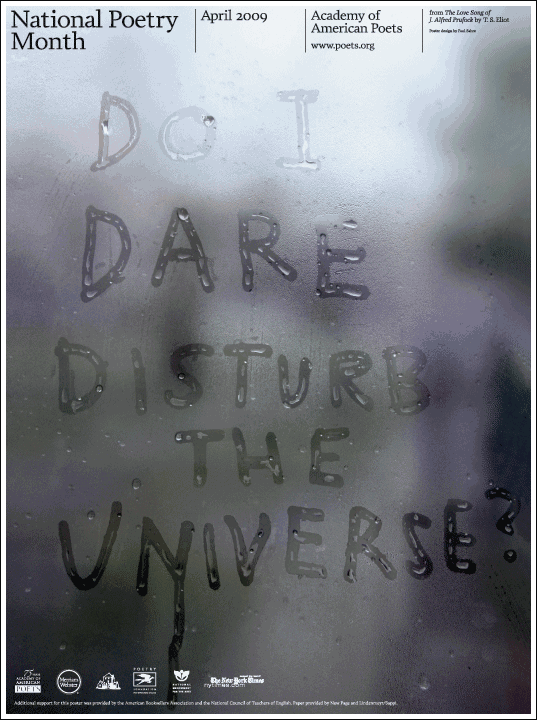
    This week, I chose an image that is the National Poetry Month poster from 2009.  I selected it because of the quote, which most of you will probably recognize from the T. S. Eliot poem, but which lovers of YA literature will also remember from Robert Cormier’s novel The Chocolate War.  This was also the title and topic of one of the earliest response papers I wrote for my Teen Lit class, my first year at The New School.  It was in this class and my subsequent literature courses that I really learned to appreciate the task of responding to literature in my writing.

    In my mind, there are three main ways you can respond to individual pieces of literature: Reviews, Response Essays and Technical Experiments.

    Reviews
    This is the most basic way you can respond to the literature in your writing.  What did you think of a book?  Why did you like it or dislike it?  Many of you may already write reviews on your blogs, so if you’re ready to raise the stakes a little.  One way to do this is to do a more in-depth analysis of the work.  Focus not so much on what the author is doing, but why and what these choices accomplish.

    Response Essays
    These essays are not straight reviews of a book, in fact, they might not a book at all.  Instead, what you do for a response essay is take a theme from a work of literature and run with it.  There are two loose categories for response essays: analysis and personal essay.  Some ideas for each category might include (but are not limited to):

    Analysis:

    • Choose a page of the work and do an in-depth, sentence-level analysis (this works best for works that have very rich language and imagery)
    • Choose a secondary character and do an analysis of the role he/she plays.
    • Take a main theme of the work and then choose one scene and discuss how it furthers that theme.

    Personal Essay:

    • Take a quote from the work that represents a strong theme and apply it to your own life in some way.
    • Choose a theme from the work and tell a story of that theme at work in your own life.

    Technical Experiments
    This is perhaps the most challenging approach to writing about literature.  In this case, you take a technique that the author uses in a particular work and try to apply it to your own writing.  In this type of writing, you don’t focus on the actual work itself, but simply try to figure out how the author did what he did, and how you can apply it to your own work.

    OK, so I’ve written something.  Now what?
    I can guess what you’re thinking: what’s the point in writing these papers if you’re not actually handing them in for school.  Not to worry, your efforts will not be for nothing.  Reviews can easily be posted on a blog and personal essays can be polished and submitted to appropriate markets.  Finally, technical experiments only serve to strengthen your W.I.P. so they are worthwhile in and of themselves.

    So go ahead, disturb the literary universe a little and write a response paper.  I won’t tell.  In fact, I think I’ll do it too.

    7 Comments »

    18 Sep

    Guest Post: Michelle Davidson Argyle Discusses Self-Publishing

    Posted in Brain Boot Camp, DIY MFA, Literature

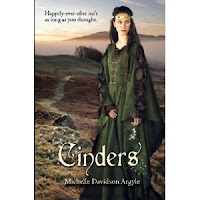
    Today I have the pleasure to introduce a guest post by Michelle Davidson Argyle.  Michelle is the author of the novella CINDERS and she’ll be sharing her insights about the self-publishing process.

    Michelle is a contributor over at The Literary Lab, which is where I was first introduced to her writing and we bonded over a mutual love of poetry.  When CINDERS was published, I jumped at the opportunity to read and review it and fell in love with Michelle’s lyrical writing style.  But before I gush any more, I’ll let Michelle share her self-publishing experiences.


    Read on to hear about Michelle’s self-publishing insights and advice and also for info on her blog tour this week and an awesome giveaway!

     —————

    First of all, thanks to Gabi for having me over here! Gabi was interested in knowing about the self-publishing process and how it relates to creativity.

    When I first decided to publish CINDERS, I knew I’d have to have a marketing plan in place and create an awesome cover and figure out how to not only get the word out about the book, but get them to want to buy the book. This is trickiness on all sorts of slippery levels. There is no sure-fire way to sell a book, and every book is different. I’ll admit I had to get really creative to figure out what would work best for CINDERS.

    With a traditional publisher, you’ve got press releases and marketing strategies already in place. They take a book because it fits a certain strategy that is most likely tested and true. For me, this being my first self-published work, I had to figure it all out from scratch, and I’m still figuring it out.

    (1) Pick a genre – I decided to market CINDERS as seemingly Young Adult, although it’s much more adult than YA. I did this because I knew the older YA readers would pick up on it and spread it around. The YA market is filled with eager, actively engaged and loyal readers. This looked like a good start, and my cover has a very YA feel, as well. That, and the novella truly does have a wide age appeal, both male and female.

    So…you’re saying…but it’s not YA…Yes, true, on a certain level. That may be a matter of perspective. Walk into the bookstore and see what books are on the shelves that could be shelved in 5 other spots than where they’re placed. Marketing. It’s slippery.

    (2) Because I self-published CINDERS – and wrote it to self-publish it, I knew I could go anywhere with it and do anything I wanted as long as it came out a professional, well-written story. Knowing this opened creative doors I never even knew were there. I wrote the book faster and with more excitement than I have ever written any long work. I did few revisions and let few people read it before its release. Keep in mind I’d written 3 novels before this and had been writing for 16 years.

    (3) I’ve had to be open-minded about creativity during every step of this publication – since I’ve had to wear many, many hats: writer, editor (with help), designer, artist, photographer, marketer, secretary, mailman, website designer…and on and on.

    Why would I want to do all this?

    I like to learn. I like to take risks. I like forging my own path. And I knew I was ready…

    That’s probably the trickiest thing of all.

    In the end, CINDERS has done well according to my standards. It’s out there and available and selling. I’m getting it into bookstores. People I’ve never met before are reading it – one of my ultimate rewards for creativity!

     —————

    The Blog Tour!  Michelle will be giving a blog tour this coming week (starting tomorrow!)  She’s hosting a FANTASTIC contest related to the blog tour, so check out the link and visit the stops on her tour for a chance to win.

    The Giveaway!  Here at iggi&gabi we’re hosting our own CINDERS giveaway.  Leave a comment below and you’ll be automatically entered and one lucky reader will get a signed copy of CINDERS.  So leave your comments between now and Thursday (Sept 23, 11:59 EST) and I’ll pick the lucky winner by lottery and announce it in Friday’s Week-in-Review.

    15 Comments »

    Iggi & Gabi - All rights reserved © 2010-2011

    I am a HowJoyful Design by Joy Kelley