13 Sep

Learning from the Masters

Posted in DIY MFA, Literature, Reading

Perhaps one of the best ways to learn to write is by reading.  Thing is, to really get the most out of your reading, you have to be strategic about it.  Sure you can read for fun, but to learn the most from your reading you need to approach it thinking “how did the author do that?”

For this reason, if you want to learn from the masters, I suggest the short form: short stories, essays and poems.  Unlike novels or other long works, the short form allows you to read and take in the entire piece in one sitting, which in turn lets you analyze how the piece is working both on the macro and micro levels.  When we read longer works, it’s hard step back and see how the work functions as a whole.  With short stories, essays and poems, we can zoom in and out, inspecting the piece at hand both in its entirety and at the paragraph or sentence level.

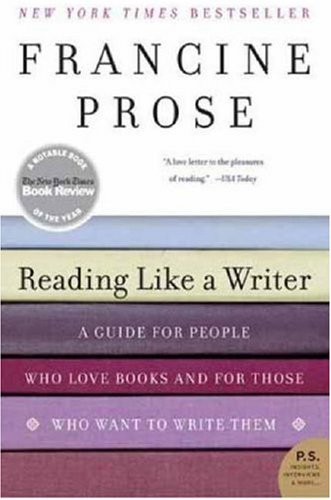
In order to read with purpose, we first have to re-teach ourselves to read.  We cannot be lazy.  We must read as writers.  In this regard, Reading Like a Writer by Francine Prose is a valuable addition to any writer’s library.  To read a excerpt, click here.  This book guides us and teaches us to read literature with an eye toward understanding how the writing really works.  It would be impossible for me to recap here everything that Prose talks about in that book and do it justice.  Instead, I thought I’d let you hear it from Francine Prose herself.  (An interview with Francine Prose is the second listing on the widget below.)

Listen to internet radio with She Writes on Blog Talk Radio

It might also be worthwhile to invest in a small collection of short form works in your genre.  Below I list a few resources and books that I have found useful.  I have researched many anthologies (especially for short stories) and have yet to find the perfect one.  The resources listed below aren’t perfect, but they’re solid and a good place to start.

Poetry

  • Poetry 180
  • Good Poems, edited by Garrison Keillor
    (This lovely collection covers a broad spectrum of poems and styles.)
  • Poets.org

Fiction

  • The Art of the Short Story, edited by Gioia & Gwynn
    (The best short story anthology I have found to date.  It contains most of the greats and is the textbook I’ll be using in the class I’m teaching this fall.)
  • Best American Short Stories, edited by various authors
    (An annual anthology of the best new short stories published that year.)
  • Project Gutenberg
    (An online database of free books!  You can even put them on your kindle or e-reader.  You won’t find contemporary stuff here, but you will find the classics.)

Essays

  • The Art of the Personal Essay, edited by Philip Lopate
    (A solid anthology of personal essays, from the forerunners to the twentieth century.)
  • The Best American Essays of the Century, edited by Joyce Carol Oates
    (Great compilation of American narrative non-fiction.)
  • The Best American Essays, edited by various authors
    (This yearly publication is a great sampling of the best new essays of each year.)

Today’s Task: Choose one short story or poem and read it closely, like a writer.  Focus on what the author is doing in the story and how the author manages to pull it off.  Then, if you like, share your experience in the comments.

    8 Comments »

    06 Sep

    Building a Reading List

    Posted in DIY MFA, Literature, Reading

    One of the most important parts of a DIY MFA is putting together a reading list and working your way through it.  A few weeks ago, I wrote about The Essentials (books about writing that I can’t do without).  Now it’s time to look at the books that make up the rest of your reading list.

    There are four types of books that should go on your list.  Two of the categories revolve around your current writing project while the other two should be unrelated to your WIP.  (For the purpose of giving a concrete example, I’m using an old WIP that’s currently on the back-burner.)

    1) Competitive Books: In this category are books that I consider to be my WIP’s closest competition.  In the case of the above WIP, this would mean books where one or more children either run away from home or go on a journey.  (Examples: The Lightning Theif, The Wizard of Oz, Bud Not Buddy, From the Mixed-Up Files of Mrs. Basil E. Frankweiler, Alice in Wonderland.)  The goal in reading books in this category is to know what’s out there and figure out how your WIP can stand out.

    2) Informative Books: This category contains books that are similar in theme as my WIP but not necessarily in the same genre or age-group.  In other words, this is where I put all the “road trip” books on my list (Travels with Charley, On the Road, Cold Mountain) as well as The Odyssey, The Aeneid and The Epic of Gilgamesh, which are the original “road trip” stories.  The books in this category might not necessarily impact my WIP directly, but they should help inform my writing and expanded my vision.  This is also where you put any books of research you need to read for your WIP.

    3) Contemporary Books: This category fluctuates more than any other because there’s always something new out that I’m dying to read.  I have piles–literally piles–hiding in the corners of my room or under my futon.  The point here is to be aware of what’s new in your genre and read a selection so that you know what’s out there and where the genre is going.

    4) Literary Fiction or “The Classics”: Right now I’m focusing only on short fiction for adults and classic children’s books.  For me, classic children’s books are ones that existed when I myself was a child (so figure 1990 or earlier).  My goal in reading the classics is to build a solid repertoire so that when I start teaching later this month, I’ll have examples of different craft techniques ready on the tip of my brain.  Even if I don’t use these books in my teaching, my hope is that they’ll make me a better reader.

    As you can probably already tell, there’s a lot of overlap between the four categories, and that’s OK.  The point is, in order to maximize your productivity don’t just read books willy-nilly, choose books that serve a concrete function for your goals.

    Your task for today: This week, take some time to put together a reading list.  Think about the next four months and figure out how many books would be reasonable to read during that time.  Now go on Amazon or to a bookstore and start browsing.

    Eventually, your goal for the day is to make a list, but it’s best to browse because some books might jump out at you that you wouldn’t have thought of otherwise.  (Remember to browse outside your genre, too.)  Try to include books in each of the four categories above, though it doesn’t have to be split evenly over all the categories.  The idea is to find a balance of books relating to your WIP and books that will inform you as a reader.

    26 Comments »

    31 Jul

    Ireland Literary Scavenger Hunt

    Posted in Literature

    To set the mood for my upcoming travels, I’ve been researching Irish literary figures.  I’ve decided to make it sort of a game for myself, seeing as many places as possible that are connected to Irish literature.  So far, I have eight authors on my list:

    Jonathan Swift, George Bernard Shaw, Samuel Beckett, John M. Synge, W. B. Yeats, Bram Stoker, Oscar Wilde and, of course, James Joyce.  (Bonus points to anyone who can figure out who’s who in the pictures above.)

    Before the trip I plan to download a bunch of books to my Kindle, all with an Ireland theme to be my reading for the trip.  These will include works by the above authors, as well as Celtic fairy tales and legends.

    Any other authors I should add to my list?  Suggestions welcome!

    2 Comments »

    28 Jun

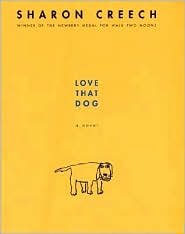
    Verse Novel #1: Love That Dog

    Posted in Book Reviews, Literature, Poetry

    This week, I read Love That Dog by Sharon Creech as the first of the verse novels for the Verse Novel Challenge.

    In this story, the protagonist Jack resists his teacher’s assignment to write poems in a weekly journal.  As he responds to his teachers comments and the poems he reads in class, we learn more about Jack, his dog Sky and his story.  What I especially liked about this book was how we only hear Jack’s voice and his side of the dialogue with his teacher, but from his responses, we can infer what the teacher is saying.  In taking this approach (rather than giving us also the teacher’s voice) Creech puts the reader in Jack’s shoes and allows us to become fully absorbed in the story.

    I’m not usually one to gush, but this book was so good I read it in one sitting.  OK, I’ll admit, it’s also a really short book, so it’s not as though “one sitting” was really a stretch.  (It was more like the dead time between two meetings.)  Still, even if I had had some appointment to run off to, it would have been hard to tear myself away.

    I wish I had read this book sooner and included it in my literature thesis because it’s a perfect example of the form of a book following function.  In particular, the experience of reading the book makes us feel as though we are Jack, reading the poems in class (which Creech wisely includes in the back of the book for the reader’s reference) and talking to the teacher through poems.

    And you can’t beat that first poem:

    September 13

    I don’t want to
    because boys
    don’t write poetry.

    Girls do.

    3 Comments »

    Iggi & Gabi - All rights reserved © 2010-2011

    I am a HowJoyful Design by Joy Kelley