
10 Jan

Reading in the New Year

Posted in Literature, Reading

picture credit

I’ve been thinking a lot about reading lately.  Why is literature important?  Why do we read it?  In the face of all these new media for getting information, why do we read at all?  Can literacy change the world?

As a continuation of September’s DIY MFA project, I would like to dedicate Mondays to all things reading-related.  Some things I’d like to talk about is the purpose that fiction and literature serve in our society.  I also want to discuss the close relationship between reading and writing and why you can’t do one without engaging in the other on some level.  Most importantly, I want to look at how we can learn to think beyond the page.

Story-telling–which is basically reading and writing at the purest level–is a unifying part of the human condition. Think about it, despite cultural or racial differences, people all over the world have engaged in story-telling for the past thousands of years.  That we know of, no other species on the planet engages in story-telling the way people do.  Sure, birds might communicate by flashing their feathers and whales might call to each other.  Chimpanzees might even learn basic sign language, but none of this is the same as story-telling, which humans have been doing since cavemen painted on walls.

I know.  Heavy stuff, right?  Before I sign-off for the day, I’ll leave you with the following:

 Writing is the ultimate form of manipulation.  Reading is the supreme act of defiance.

Agree or disagree?

8 Comments »

17 Nov

Finding Competitive Books

Posted in DIY MFA, Literature, Process, Tips


Sooner or later, writers have to put their writing into context.  This means tracking down published books that are similar to the WIP (i.e. competitive books) and reading them.  Some writers like to do this sort of research as they’re working on their own book.  Other writers prefer to hold off until they’ve been through a draft or two.  Regardless of when you decide to start doing your research, it’s going to take time.  And that’s time you won’t be spending writing, or revising, or querying, or… you get the picture.

Which brings me to the point of this post.  How do we actually find these elusive books in the first place?  And for that matter, how do we keep our reading lists from getting long and out of control?  I’m a perfect example of the latter.  Every time I hear of a book even remotely similar to my WIP, I have run out and read it.  This is all well and good, but it does nothing to get my actual WIP written in the first place.  The message here is to find a balance.  Yes, research is important, but the key is to do it efficiently and effectively.

To that end, here’s a nifty trick I’ve discovered that has helped me speed up the search for competitive books.  All you need is the internet and the title of (at least) one competitive book.

1) Go to Amazon.com and search for that one competitive book you’ve already found.   If you don’t have the title of at least one book that’s similar to your WIP, try doing a keyword search.  All you need is to find one book and then the search becomes much easier.

2) Scroll down to where it says “Customers who bought this book also bought…”  Browse through the books listed and make a note of any that might fit within the context of your WIP (similar themes, genre, target audience, etc.)

3) Use the “Look Inside” feature on Amazon or search for the titles you’ve noted using Google books.  Read a few pages.  An alternative is to go to a bookstore or library with your list and browse the shelves.  After all, you want to make sure the books you’ve put on your list are actually going to be useful.

4) Now read ’em.

This trick might seem like a no-brainer to all you super-efficient genius researchers out there, but believe it or not it took me forever to figure out.  In case anyone else out there has been beating their heads against the wall (like I did for so long) I figured I’d pass on this trick.  Sure, this search tool isn’t foolproof and nothing beats the tried-and-true method of getting recommendations from a librarian or knowledgeable bookseller.  But in a pinch, this saves time.  And as I see it, that just means more time for writing.

On a separate note: Don’t forget to check out my contest!  It’s open until Saturday.

9 Comments »

10 Nov

Verse Novel Challenge Update

Posted in Literature, Poetry

Hi all!

As you may recall, I’m participating in Caroline Starr Rose’s Verse Novel Challenge.  The goal is to read five verse novels by the end of 2010.  I’ve recently finished reading the fifth one so I thought I’d do a little update and give my take on the verse novels I’ve read.

Love that Dog by Sharon Creech

This was the first verse novel I read this year, which I reviewed here.  I loved this book and read it in one sitting because I couldn’t put it down.

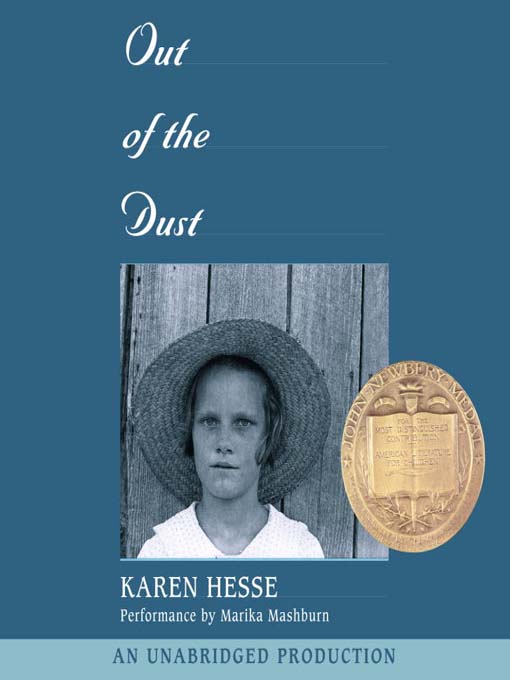
Out of the Dust by Karen Hesse

A beautiful, heart-wrenching book.  I was completely pulled in.  The musical connection (the main character’s love of the piano) especially resonated with me.

Witness by Karen Hesse

Loved this book.  It was SO powerful.  I especially loved how each of the different characters had such distinct voices.  After a while I didn’t need to see their names at the top of the poems; I could tell who was speaking from the language alone.  I wish I had read this when I was writing my literature thesis on “Book As Experience” because it would have been a perfect fit.

Make Lemonade by Virginia Euwer Wolff

The prequel to True Believer, this book is simply lovely.  Unlike the other verse novels I read, this was the only one that read as one long poem, rather than a collection of poems.  I know in a previous post I questioned whether Wolff’s verse novels could be considered such (since she herself refers to them as “prose with line breaks”).  But I was dying to read Make Lemonade and figured that if it felt poetry to me then it would be OK to consider it part of the verse novel challenge.  Let me tell you, it was pure poetry.

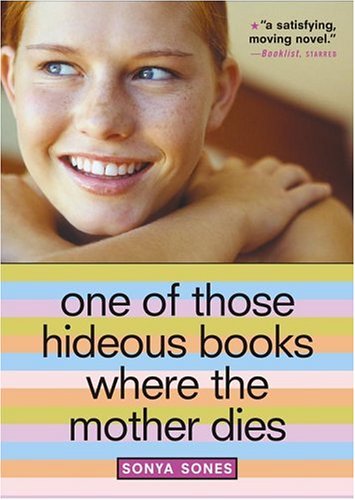
One of Those Hideous Books Where the Mother Dies by Sonya Sones

This was another book that I read in one sitting.  I love the idea of a book set in LA and in the glitz and glamor of the celebrity world and yet the story rings true to any kid.  The pain of loss, the trials of fitting in at a new school, these are all things that readers can relate to, regardless of the glamorous setting. My only quibble was with the ending, which was a teensy bit predictable, but it was still satisfying. 

4 Comments »

22 Oct

Which Comes First?

Posted in DIY MFA, Literature

Last week, I got an interesting question about writing big papers and coming up with the argument.  The question was:

“Is it more like an argument that you will prove or disprove by reading the books? I don’t know how I can make such any statement without reading the books and finding out how authors are approaching a topic…”  ~Kerryn Angell

This question got me thinking about the chicken-egg dilemma that often accompanies academic papers.  The problem is this: most papers we write in high school, college and even graduate school are artificial.  The parameters of the paper force us to look at only a limited number of works and construct an argument from there, ignoring the rest of the canon.  Not only that, oftentimes professors require us to get a stamp of approval on our “thesis statement” before we’ve even read the books!

The reason professors and colleges often use this method is because of a simple, yet powerful constraint: time.  Students just don’t have the time to go on a hunting expedition to craft a scholarly paper so the teachers narrow the task down for us.  They limit the number of books we discuss in the paper, they check our thesis statements before we start, they make sure we’re headed in the right direction.  They do all of this because they want students to focus on learning to write the paper, and not waste hours of time hunting down a thesis through piles of books.

In DIY MFA things are a bit different.  We have the freedom to make mistakes, beat our head against the wall and have a few false starts.  When I wrote my literature thesis for the MFA, I didn’t tell the professor but I read at least ten books that fit the thesis.  We were only allowed to choose four, so I chose the ones that best illustrated my point and saved the rest of the books for later.  Someday I will go back to that literature thesis, rewrite it to encompass all the books I want to include.  But that is a project for a later time.

My point is, that when you’re writing or planning the “Big Paper” for DIY MFA, you have the freedom to explore the literature first.  Read a lot.  Think a lot.  Then make up your mind about what you want to say about the literature.  The goal here isn’t to write a mind-blowing paper (though that would be awesome).  Rather, the point is to build a strong relationship with reading and to see how books fit together, relate to each other.

In this aspect of DIY MFA it’s OK to be a detective.  In fact, that’s probably a good thing.  And who knows, maybe as you sleuth out your argument and look for connections between books, you might just find a few of these.

3 Comments »

Iggi & Gabi - All rights reserved © 2010-2011

I am a HowJoyful Design by Joy Kelley