
18 Sep

Guest Post: Michelle Davidson Argyle Discusses Self-Publishing

Posted in Brain Boot Camp, DIY MFA, Literature
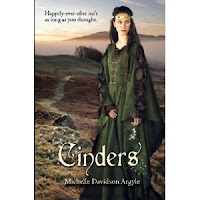
Today I have the pleasure to introduce a guest post by Michelle Davidson Argyle.  Michelle is the author of the novella CINDERS and she’ll be sharing her insights about the self-publishing process.

Michelle is a contributor over at The Literary Lab, which is where I was first introduced to her writing and we bonded over a mutual love of poetry.  When CINDERS was published, I jumped at the opportunity to read and review it and fell in love with Michelle’s lyrical writing style.  But before I gush any more, I’ll let Michelle share her self-publishing experiences.


Read on to hear about Michelle’s self-publishing insights and advice and also for info on her blog tour this week and an awesome giveaway!

 —————

First of all, thanks to Gabi for having me over here! Gabi was interested in knowing about the self-publishing process and how it relates to creativity.

When I first decided to publish CINDERS, I knew I’d have to have a marketing plan in place and create an awesome cover and figure out how to not only get the word out about the book, but get them to want to buy the book. This is trickiness on all sorts of slippery levels. There is no sure-fire way to sell a book, and every book is different. I’ll admit I had to get really creative to figure out what would work best for CINDERS.

With a traditional publisher, you’ve got press releases and marketing strategies already in place. They take a book because it fits a certain strategy that is most likely tested and true. For me, this being my first self-published work, I had to figure it all out from scratch, and I’m still figuring it out.

(1) Pick a genre – I decided to market CINDERS as seemingly Young Adult, although it’s much more adult than YA. I did this because I knew the older YA readers would pick up on it and spread it around. The YA market is filled with eager, actively engaged and loyal readers. This looked like a good start, and my cover has a very YA feel, as well. That, and the novella truly does have a wide age appeal, both male and female.

So…you’re saying…but it’s not YA…Yes, true, on a certain level. That may be a matter of perspective. Walk into the bookstore and see what books are on the shelves that could be shelved in 5 other spots than where they’re placed. Marketing. It’s slippery.

(2) Because I self-published CINDERS – and wrote it to self-publish it, I knew I could go anywhere with it and do anything I wanted as long as it came out a professional, well-written story. Knowing this opened creative doors I never even knew were there. I wrote the book faster and with more excitement than I have ever written any long work. I did few revisions and let few people read it before its release. Keep in mind I’d written 3 novels before this and had been writing for 16 years.

(3) I’ve had to be open-minded about creativity during every step of this publication – since I’ve had to wear many, many hats: writer, editor (with help), designer, artist, photographer, marketer, secretary, mailman, website designer…and on and on.

Why would I want to do all this?

I like to learn. I like to take risks. I like forging my own path. And I knew I was ready…

That’s probably the trickiest thing of all.

In the end, CINDERS has done well according to my standards. It’s out there and available and selling. I’m getting it into bookstores. People I’ve never met before are reading it – one of my ultimate rewards for creativity!

 —————

The Blog Tour!  Michelle will be giving a blog tour this coming week (starting tomorrow!)  She’s hosting a FANTASTIC contest related to the blog tour, so check out the link and visit the stops on her tour for a chance to win.

The Giveaway!  Here at iggi&gabi we’re hosting our own CINDERS giveaway.  Leave a comment below and you’ll be automatically entered and one lucky reader will get a signed copy of CINDERS.  So leave your comments between now and Thursday (Sept 23, 11:59 EST) and I’ll pick the lucky winner by lottery and announce it in Friday’s Week-in-Review.


15 Comments »

17 Sep

DIY MFA: Week 2 In Review

Posted in DIY MFA, Week in Review

I cannot believe we’re already halfway through DIY MFA!  I hope you guys are enjoying it as much as I am because I’m having a blast.  Before I go into the weekly recap, I just wanted to give a huge shout out to my followers.  Yes, all you adorable faces in the sidebar, I’m talking about you.  Every time I log in, I see new smiling faces and you all make me giggle inside.  You rock!  Have a sticker.

Recap of this Week in DIY MFA:

Saturday: Morphological Forced Connections
This writing trick uses a matrix to help you come up with writing prompts or other writing ideas.  Earlier this week my writing group used this technique to come up with ideas for one writer’s title.   You can used MFC for just about any type of brainstorming.

Sunday: Mind Mapping
Use mind map diagrams to brainstorm or outline your story.  This is great for visual thinkers or writers who don’t like traditional outlines.

Monday: Learning from the Masters
Use your reading time to learn to write.  Includes a list of suggested resources.

Tuesday: Author Readings and Literary Events
One great way to connect with other writers is through readings and literary events.  Check out a reading series at a local university or author readings at your local bookstore.

Wednesday: Moving Right Along: Ins and Outs of Plot
Studying plot archetypes can help figure out your story structure.  Figure out what your character wants and what’s standing in his/her way and Voila! You’ve got conflict.

Thursday:
Giving Useful Critiques
Tips for giving strong critiques and a sample passage critiqued by several writers. 

Don’t Forget:  There’s still time to register for iggi U.  Check out the iggi U tab for more information or to catch up on previous posts.  If you register, you automatically get entered in the DIY MFA contest (Prize = 25-page critique!)

Now, please tell me because I NEED to know: how did this week go for you?  Any suggestions or ideas you’d like to share?

7 Comments »

16 Sep

Giving Useful Critiques

Posted in Critique, DIY MFA

Last week we talked about what goes into putting together a strong critique group.  This week and next we’ll be discussing the actual critique process, both the give and the take.

Giving critique is as much an art form as writing the work itself.  A strong critique can mean the difference between a piece being mediocre and it being great.  But to get this good result, you need both a reader who gives critique well and a writer who knows what to do with the critique.

What makes a strong critique?

 1) Positive first.  No point in tearing down the writer from the beginning of the critique session.  I’ve found that writers are more likely to listen to my critique points if I start off the critique with one or two positives, then offer suggestions for change.

 2) Keep it specific.  Often readers will give vague critiques like “the dialogue is stilted” or “I didn’t like the character” but amorphous comments like these are just cop-outs.  Remember the adage Show, Don’t Tell?  It works for critiques too.  Don’t just tell the writer what isn’t working, show them a specific example in their own piece.

3) Don’t just say what you like/dislike, say why.  Similar to the previous point, saying “I don’t like this part” doesn’t help the writer fix the problem.  Instead, if you explain why it isn’t working for you, then the writer has a better idea of what needs to be done in revision.  Notice that this point applies both to positive comments and critique points.  There’s no point in knowing that something is good if you don’t know why it worked so you can repeat it in the future.

4) Try to offer suggestions for change.  This point is always controversial with some writers because they firmly believe that writers shouldn’t tell other writers how to write their books.  I’m not advocating that those giving critique rewrite the work for the writer, I’m simply saying that they should offer suggestions, not just criticism.  Whether or not the writer takes the suggestions is up to him or her, but at the very least, they will have some idea of how to rework what isn’t working.

5) Write legibly or type.  This one seems silly, but you wouldn’t believe how many times I’ve gotten critiques back and the handwriting is so bad I have no idea what that reader was saying.  If you’re going to take the time to read and comment on a piece, make sure your investment is worthwhile by making sure the writer can actually read what you wrote.

Sample Critique

 Now we’re going to play a bit of a game.  I’m going to post a paragraph written by an “anonymous” author (AKA iggi) and you’ll all get a chance to try out some of the above techniques.  I’ve also gotten some writer friends to read this paragraph so I’ll include some of their comments below as well.

         It was sunny the day I died, and a light breeze tickled my skin.  Birds chirped.  Lavender scent floated from the bushes like an invisible cloud.  Of course, at the time I did not realize I was dead; that was to come later.  I lay on the ground, frozen like a statue, my hands and feet locked still as though they had been nailed to the pavement.  I wonder if that’s where the saying came from: dead as a doornail.  But I am getting away from myself.  A crowd gathered around me.  The first to stop was a woman with a Botox face and plastic boobs.  She wore a pink velour jogging ensemble but did not look sweaty so I figured she wasn’t wearing it for the jogging.  Next came a man, dripping and breathing heavily.  His limbs were long and stringy, like pulled meat.  His running shorts were too short.  There came others.  A pair of police officers.  A team of paramedics.  A dog-walker with a pack of thirteen dogs.  I remember counting them and thinking “that must be my lucky number.”  And then he came.  The man in the black suit.  He looked like a bodyguard.

 “Although the protagonist’s name is not given, we are shown through details that they have a strong use of the five senses: touch (a light breeze tickled my skin), sound (birds chirped), smell (lavender scent floated from the bushes…), sight (woman with a Botox face…).”     ~CB

“What does it say about a character that speaks in cliches? Very intriguing.”     ~CB

“I love the opening line!  It grabbed me immediately and made me want to read further.”     ~DR

“I liked the lines about the lavender scent from the bushes and the woman in the jogging suit. The line about the man who’s limbs were like pulled meat is excellent. Solid imagery.”     ~DS

“You mentioned a crowd gathering. What were they saying? How does the protagonist’s five senses come into play more during those details?”     ~CB

“I’m wondering if you could come up with something other than ‘frozen like a statue’ as it’s such a common cliche.  The same goes for dead as a doornail although that could almost work since you refer to it as a saying.”     ~DR

“I’m also not sure about how I feel about the man who was dripping and breathing heavily.  He needs more of an explanation as to why he was dripping and breathing heavily.  At the end of the sentence we can deduce that he’s been running because of his shorts, but I’d rather see that in the beginning of the sentence.”      ~DR

“I wasn’t sure if the internal monologue about “getting ahead of myself” worked for me.  I lost focus there a bit.”     ~DS

“Also, did the police officers and paramedics do anything? I’d like to get a sense of what they were saying or if this character could even hear them. Were they describing the scene as it looked to them? Did anyone have a look on their face that indicated that the main character was dead?”     ~DS

Today’s Task:  Read the sample paragraph above and if you like, share your critique below.  Don’t worry, iggi’s used to having his work pulled to shreds so go wild!

9 Comments »

15 Sep

Moving Right Along: The Ins and Outs of Plot

Posted in Craft, DIY MFA, Plot

John Gardner once said that there are two types of stories in literature:

(1) Man goes on a journey.
(2) Stranger comes to town.

While it might seem simplistic to think that all stories in literature boil down to these two categories, but let’s look a little closer, shall we?

Examples 

  • Odyssey (Homer) – clearly (1), as the story revolves around Odysseus’ journey but also (2) when you consider all that happens when he shows up back in Ithaca.
  • Feed (M.T. Anderson)- definitely fits category (2), but we can also view the book as a journey into understanding the feed (1).
  • The Wizard of Oz (L. Frank Baum) – again, it appears on the surface to be about a journey (1) but if we look more closely, we realize that it also fits category (2), in that Dorothy is the stranger that comes to the “town” of Oz and shakes things up.

So if we have all these examples where books fit both of Gardner’s categories, how can we define plot?  Are all stories about both going on journeys and strangers coming to town?

The thing is, stories aren’t just about people going out into the world or facing a hostile environment.  Stories are about people facing other people and that is where a lot of the conflict arises that drives the story.  And the minute we start talking about conflict, the issue of power comes up.

The way I see it, narratives break down into three categories of conflict:
   (A) Protagonist must confront an entity with more power.
   (B) Protagonist must confront an entity with equal power.
   (C) Protagonist must confront herself.

Notice how there is no category for the protagonist to confront an entity of lesser power.  This is because if the protagonist faces off with someone or something that is easily overcome, there is no conflict.  Remember: conflict drives the story.

Let’s take a look at some plot archetypes that fall into these categories.

(A) is the classic Underdog Story.  Some archetypes in this category are:

  • Fish Out of Water – The protagonist is confronted with a foreign environment where he/she feels like an outsider.  Note that the protagonist can already be in this environment to begin with and events transpire that make the environment hostile.  In this case, the environment is the entity with power.
  • Cinderella Narrative – In a “Rags-to-Riches” story, a character of lower status (Cinderella) must convince a character of higher status (Prince) to recognize qualities of value in her.  Notice also that this story fits the “Fish Out of Water” scenario where Cinderella must pretend to be someone she is not in order to be accepted by the prince.
  • David & Goliath – The underdog (David) is faced with a character much more powerful than he, but because of his innate qualities, he manages to vanquish his powerful opponent.  This is the ultimate underdog story.
  • Come-Back Story – The protagonist used to have power but now has none and must turn his fate around to resume his position of power.  Revenge stories fall under this category because in this case the character resumes power by exacting revenge.
  • Pygmalion – A powerful character “creates” a less powerful one, intending to use him, but the “creation” develops enough power to take on a life of its own and causes trouble. (Ex: Frankenstein)
  • Secrets – The protagonist discovers a secret that threatens a powerful person or institution.  The central conflict then is whether the protagonist will be able to unlock the full secret while the entity in power tries to stop him.  (Ex: Da Vinci Code.)
  • Knight (or Hobbit) in Shining Armor – There is an antagonist–a great force or opponent–and the protagonist is the only one who can stop it.  In many cases, this protagonist is not a powerful knight, but a humble character who gets pulled into the adventure.  (Ex: Fellowship of the Ring)

(B) is a Narrative of Connections story.  Some archetypes here are:

  • Submission to Love – Love blinds the protagonists causing them to do things that lead them into more and more trouble.
  • Star-Crossed Lovers – A couple wants to be together but they are being kept apart by some outside force.  This is a subset of the Submission to Love story.
  • Lost Twin – Two characters (often enemies) are thrown together and discover a kinship or likeness between them.  (Ex: the movie The Parent Trap is a literal example)

Note: This analysis of story structure and some of these examples have been adapted  from a lecture given by Perry Brass in April 2007.

(C) Finally we have an Introspective Narrative in which the protagonist confronts herself.  Here, the protagonist has some great inner conflict that must be resolved.  This type of narrative rarely occurs on its own; after all, 300 pages of introspective monologue would be seriously boring.  Usually (C) occurs as a parallel thread to a story structure that falls under one of the above categories.

Notice that in all of these plot archetypes we have a character who wants something (to fit in, to get revenge, to find love) but that want is thwarted by some entity of either equal or greater power.  The power struggle is part of what creates the conflict and conflict is what plot is all about.

Today’s Task: Examine the power in your story by answering the following questions.

1. What does your character want?
2. What’s standing in his/her way?
3. What specific obstacles prevent him/her from obtaining this goal?
4. Outcome: does the character obtain the goal? What are the implications of this outcome?

Additional Resources

  • The Plot Whisperer (Martha Alderson) has put together a series of podcasts that talk about plotting a story.  She also has a blog that discusses all things plot-related.
  • Antonette Hornsby (AKA Ant) recently write a post about the LOCK method in developing a plot.

10 Comments »

Iggi & Gabi - All rights reserved © 2010-2011

I am a HowJoyful Design by Joy Kelley