
25 Mar

YA Cafe: 5 Ways Romance Can Enhance a Story

Posted in Literature, Reading, Teen Lit, YA Cafe

Welcome Back to YA Cafe, where book lovers can gather and chat about teen literature.  I’m your barista, along with Ghenet from All About Them Words.

Each Friday we pick from a menu of topics and share our thoughts on our respective blogs.  We’ve also got plans brewing for interviews, events and even some exciting giveaways, so stay tuned!  Join the discussion by responding in the comments, on your own blogs or on twitter using the hash tag #yacafe.

Today’s Special:  Why does romance matter in YA?

5 Ways that Romance can Enhance a Story (YA, or not):
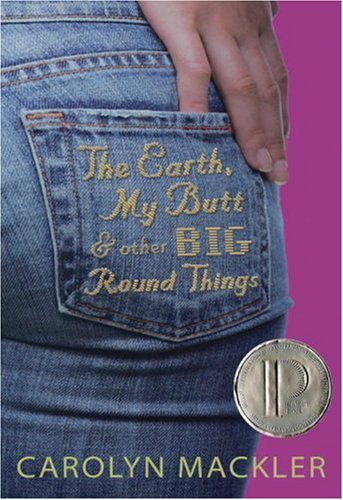
1) It creates conflict.  From Judy Blume to Carolyn Mackler, authors know that adding a romantic interest to a story is a great way to add conflict.  Even if the story itself is not about the romance, having romantic tension can add an element of conflict to the plot.  Take Mackler’s The Earth, My Butt and Other Big Round Things for example.  In this book, the main issue revolves around the protagonist’s self-image and her relationship to her family, but her tension with “the boy” helps add an extra conflict.

2) It offsets violence or sadness.  In books where violence (The Hunger Games) or sadness (If I Stay) are central to the story, having a romantic element brings in a breath of fresh air amidst the pain.  In The Hunger Games moments between Peeta and Katniss give the reader a little break from the constant chaos of the violence.  In If I Stay, the deep sorrow that fills the book is offset by happier flashback moments between the protagonist and her boyfriend.

3) It raises the stakes.  Again, The Hunger Games is a perfect example.  Until Peeta declares his love for Katniss, the main conflict in the story is “Will Katniss win the Hunger Games and survive?”  But the minute we start liking Peeta and we realize that he’s willing to sacrifice himself for Katniss, the stakes get higher.  According to the rules, there can’t be two winners in the games, so for Katniss to survive Peeta will have to die.  Voila!  Higher stakes.

4) It helps make less sympathetic characters sympathetic.  This one was tough to find examples to illustrate, but Dakota in Tangled is a good example.  When we first meet him, he seems cruel and manipulative but as the story develops, we learn details about his romantic life that explain his manipulate behavior.  His budding relationship with a new woman adds depth to his character and makes him more sympathetic.
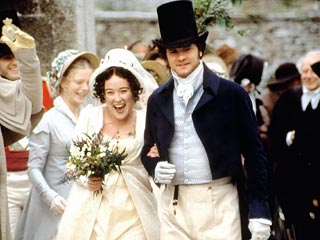
5) Even if we know how it will turn out, we still keep reading.  I call this the Pride and Prejudice effect.  Sure, we know almost immediately that Lizzy and Darcy will end up together, but we keep reading.  The interest isn’t in what will happen, but how.  Unlike any other element or genre in literature, romance is the only one that can be completely predictable and yet will still keep us reading.

Want to read more about romance?  Fellow barista, Ghenet shares her thoughts on her blog: All About Them Words.  Check it out, then tell us why romance in YA matters to you.

6 Comments »

24 Mar

DIY MFA 2.O: Schedule

Posted in DIY MFA, Info

Yesterday, I talked about the Four Phases of Idea Generation and I mentioned that the Inspiration Phase would play a big role in DIY MFA 2.O.  For all of April, we will focus on different ways of sparking inspiration by using four different elements of writing as our jumping off point.  Week 1 will be all about character.  In week 2, we’ll look at story and week 3 will emphasize mood.  Finally, in week 4 we’ll focus on how words themselves can generate new ideas.

Within each week, we’ll approach each topic using courses from DIY MFA as a framework.  These courses will be: Love of Literature, Brain Boot Camp and Craftivity.

Love of Literature
Mondays
If you’re doing this DIY MFA, you’re probably a big reading fan.  In fact, I’m guessing you have piles of books hiding under your couch, in the pantry, or even in your freezer.  Who uses a freezer, anyway?  It’s just a big yummy box that will keep your books minty-fresh until you’re ready to gobble them up.  But I digress.  The trouble with reading is that taking a random approach doesn’t always serve us writers best.  In Love of Literature we’ll look at specific pieces of writing and talk about how reading can help us think of new ideas as well as gain a deeper understanding of craft.

Craftivity
Tuesdays & Wednesdays
This course is all about how craft and creativity come together.  We’re talking about that wonderfully exciting kind of craft that’s all about writing and creativity.  in DIY MFA 2.O we’ll look at how to use certain elements of craft to spice up our writing or to spark new ideas.

Brain Boot Camp
Sunday & Thursday
This super-intensive approach to creativity will be all about drawing outside the lines, breaking down mental blocks and living the creative life.  Think of this component as a month-long creative kick in the backside. 

Fridays will still be dedicated to YA Cafe, though I’ll do my best to link the posts to the DIY MFA weekly topic.

On Saturdays, we all do our Writing Sprints.  I’ll do a short post to help you get started if you need a boost, but you don’t have to be limited by that weekly prompt.  The sprint is your time to work on whatever project you like.  Also, I’ll include badges so at the end of the sprint you can post them on your own sites and show off your accomplishment.

DIY MFA 2.O Schedule

Sunday: Brainstorming (Brain Boot Camp, part I)
Monday: Literature Study (Love of Literature)
Tuesday & Wednesday: Craft Study (Craftivity)
Thursday: Warming up for the Sprint (Brain Boot Camp, part II)
Friday: YA Cafe
Saturday: Writing Sprint

Note: While with the first DIY MFA series, you could focus on only the courses of your choice, this time around all the weekly classes build on each other.  While I won’t be doing weekly recaps, I will create page for  DIY MFA 2.O and post links to all the posts so if you miss anything, you can catch up.

Can’t wait to get started.  How about you?

4 Comments »

23 Mar

4 Phases of Idea-Generation

Posted in Creativity, DIY MFA, Process, Writing

Most new ideas or concepts go through a four-phase process.  The time spent in each phase–along with the order of the phases themselves–can vary depending on the person and the project.  Some phases can even be repeated multiple times throughout the creative process.

4 Phases of Idea Generation

Inspiration Phase
This phase is where you get that initial spark of an idea and it’s what most people think of as the creative process (though as you’ll see, the creative process extends beyond this phase).  In DIY MFA 2.O, we’ll be focusing on this phase, talking about some of the techniques writers can use to dig up new ideas for projects.

Incubation Phase
This is when you let the idea sit for a while.  You might feel weird leaving a project hanging–lazy even–but this phase is an important stage in any creative development.  In writing, incubation can occur between drafts, in the middle of a draft, or even before you start the very first draft.  The important thing is being able to recognize when you need to step back from a project and give yourself room to do so.

Illumination Phase
This is the evaluation stage, where you look at the idea or project, tease it apart and figure out its weak points.  This is also where you look at the overall organization of your idea and shuffle things around as needed.  While your inner critic might usually be persona non grata, in this phase, it might be appropriate to let it have its say.  Later on, we’ll talk later about ways to use your inner critic productively without letting it go spastic and take over your project.

Implementation Phase
This phase, which usually comes at the end, is where you stop thinking and start writing.  Funny how that keeps coming up again and again in ORACLE-related posts.  In the end, it all comes down to the same thing: you can plan and think and ponder all you like, but sooner or later you have to sit down and write.

Every writer has at least one phase they love and at least one that makes a root canal sound like fun.  For me, implementation is where I drag my feet but I’m nutso for the other three.  In fact, I have to limit the number of WIPs I have going or else I’d be constantly tempted to start a ton of projects and I’d never finish any.  What phase do you tend to get “stuck” in and never want to leave?  Which phase scares the living daylights out of you?

5 Comments »

22 Mar

5 Principles for Generating Ideas

Posted in Creativity, DIY MFA, Process, Writing

When it comes to generating ideas there are basically two ways you can do it: the easy way and the hard way.  Neither one is necessarily better than the other, but the easy way will definitely save you a lot of time, stress and agony, while the hard way… well, it’s just hard.

This is where the ORACLE comes in.  The ORACLE is all about making life easier for you, especially when it comes to generating ideas.  Here are a few principles that I’ve learned from my ORACLE that have helped make my writing life a lot easier.

•  Leave some things to chance.  Let’s face it, part of what makes writing so challenging isn’t that we don’t have enough choices, it’s that we have too many.  Sometimes having to make so many decisions can be paralyzing and limiting your options can actually be liberating.  This is when I turn to the ORACLE.  With the flip of a coin or roll of the die, I can take a decision out of my hands and put it in the hands of chance.  Today, try letting chance decide one small detail in your writing.

•  Engage the five senses.  When I’m at a loss for ideas, I go back to the basics.  I focus on the five senses, particularly senses other than sight (since that one tends to be the one I use most often).  I make a soundtrack for the story I’m working on.  I burn a candle and focus on the scent.  I eat jelly beans in weird flavors.  I go to my knitting stash and pet the yarn.  The latter is how I got the idea for one of my projects.  Try to draw on one of your lesser-used senses.

•  Embrace the unexpected.  I still remember the first time a character of mine hijacked the story from me.  I was writing a short story with an eleven-year-old boy protagonist and suddenly the kid is standing in the living room with his mom measuring him for a party dress and I realized that my character was really a girl.  I spent some time trying to rework the story, to keep with my original vision but the story only came to life the minute I let go of my own personal agenda and let the character be who she wanted to be.  Have you ever had something unexpected come up in a project?  How did you handle it?

•  Step beyond your comfort zone.  It’s easy for writers to get into a routine and sometimes rituals can help us prepare for a writing session.  At the same time, though, too much routine can hinder more than help, and it’s up to us to do something to shake things up.  For me, a great way to break a humdrum routine is to try an new environment.  Sometimes that means just moving to a different room in the apartment; sometimes I have to pack up my notebook and take a subway to a different part of the city.  Do one small thing this week to push you outside your comfort zone.

•  Practice, practice, practice.  One of the most important parts of DIY MFA is the actual doing of it.  We can talk about writing in the abstract forever but the writing won’t do itself.  Sooner or later we have to grit our teeth and do the work and this is where practice comes in.  A friend recently recommended an app for the computer called Pomodoro.  I tried it and now I swear by it.  Seriously.  It keeps me accountable and forces me to focus for short spurts, rather than letting me sit at my desk for hours, zoning out and checking twitter.  What kinds of techniques can you use to help get you in the zone?

How you can apply these five principles to your writing this week?

8 Comments »

Iggi & Gabi - All rights reserved © 2010-2011

I am a HowJoyful Design by Joy Kelley