24 Jan

How Reading Can Change the World

Posted in Conferences, Inspiration, Reading, Writing

OK, we’ve already established that reading is awesome, but imagine my surprise when I went to the Writer’s Digest Conference and the most inspiring talk of all was not actually about writing.  It was about reading.

Richard Nash, who gave the lunch keynote speech on Saturday, gave a fascinating talk about how writers have to be readers, how reading and writing are the opposite sides of the same interaction.  All I have to say is: OMG did he read my mind?  This is exactly the sort of stuff I’ve been obsessing over for the last few weeks.  In fact, after hearing Richard Nash speak, I am completely convinced that reading can, in fact, change the world.

A few weeks ago, I posed the following statements for discussion.

Writing is the ultimate form of manipulation.
Reading is the supreme act of defiance.

Some of you got the writing part of the equation right away.  When we write, we can control the words and how we express them to guide the reader in whatever direction we choose.  Writing–if you really think about it–is no more than a few inky scribbles on a page.  Lines and dots.  But if we’re strategic in how we use those lines and dots, we can actually put ideas into our reader’s head.  We can direct and manipulate what our reader imagines and how our reader responds.  Richard Nash had a great analogy for this concept in his keynote: “Our words are hours that we can take up inside someone’s head.”
I don’t know about you, but I think that’s a powerful thing (and not a privilege to be taken lightly).
But what about the reading part?  How can reading be an act of defiance?  I addressed this when I talked about types of readers last week.  Some people might read to get the information or to figure what the author’s trying to say, and that’s fine.  But the moment you realize that everything the writer’s doing with his words is essentially an act of manipulation–a way of taking up real estate inside your brain–then you can start reading like a revolutionary.  All it takes is awareness, knowing that the writer’s doing some slight of hand tricks and is trying to direct your mind this way or that.  Once you’re aware of this, you can step back and decide if you actually want to be directed.  And once you do that, you’ve become a rebel.  You’re fighting the machine.  You’re Reading.
And how, exactly, can Reading change the world?  That’s easy.  One of the biggest problems I see with the world is that everyone out there is trying to be a writer.  Everyone’s got an agenda; they’re trying to use their words and take up mental real estate and get people to listen to what they have to say.  The problem is, very few people out there put effort into Reading-with-a-capital-R.
I totally get why that happens, though.  Reading like that can be exhausting, sort of like watching a magic show and constantly trying to figure out how the magician pulled off the last trick. Our world is so saturated with information that it would be impossible to read like a revolutionary all the time.  We’d all lose our minds.  The trouble is, a lot of people have stopped Reading all together.  They just accept the information they see at face value and move on to the next thing.  I call this voluntary illiteracy.
In the end, Nash’s speech came down to one important point: “Writing and reading are behaviors.  Most people do both.”  I agree completely and would add only one thing:  To change the world, we need to do both but do them responsibly.
I thank you all for the privilege of letting me take up a small slice of your mental real estate.  Now go out there and do something amazing with your words.

8 Comments »

24 Jan

Sharing the Awesome: Writer’s Digest Conference 2011

Posted in Community, Conferences, Inspiration, Writing

Hello friends of iggi!  How I missed you and your smiling bloggy faces while I was at the Writer’s Digest Conference.  It was such a great weekend though and I had oodles of fun.  I met lots of amazing people and learned tons and tons.

Oooh, and guess what…  I’ve brought back prezzies!

There was so much awesome stuff to learn at this conference and I want to share it all with you.  After all, what’s the fun of having something awesome if you can’t share it with your friends, right?

The bad news is, I can’t give you exact transcripts of all the sessions I saw.  First off, I didn’t manage to take notes on every last detail of awesome because I can’t write that fast, so I only wrote down the really good stuff.  And secondly , I’m not sure it’s actually legal or good-sportsman-like for me to transcribe those sessions anyway.  (And lawyer-hubby reads this blog, so I gotta stay on the nice side of legal.)

But the good news is, I can give you the really super bits of awesome.  And when it comes to the other stuff… really, do you want to hear the boring parts?  Didn’t think so.

What does this mean for the iggiLand?  For the next whatever-many days, I’ll be doing recaps of all the super-amazing tools, tricks and ideas I picked up at the conference.  This means I’ll be breaking out of my usually-scheduled post topics, but I have a hunch you’ll forgive me.

Here’s a preview of what’s in store:

  • How Reading Can Change the World
  • Agent Panel: Quit Obsessing
  • Every Book Can Get Better
  • Writing Conferences: Don’t Be “That Guy”
  • Two Words about Social Media: Don’t Panic
  • How to Survive the Revision Process
  • Blogging 101
  • Writing: We Are All in This Together

In the meantime, you can find more awesome at the Writer’s Digest live conference blog.  Oh, and if you were at the conference and you couldn’t see a session because it conflicted with another one, you can always check out the live conference blog to see the ones you missed.  (I know I’m going to…)

And on twitter, check out the #wdc11 hash tag for conference-related tweets.

Oh, and if you were at the conference and are doing recap posts on your blog, feel free to leave the link in the comments so we can all share the awesome with you!

Now, here’s a round of iggi-tinis for all.
2 Comments »

20 Jan

The Portacle

Posted in Brain Boot Camp, DIY MFA, Inspiration, Writing

As of last weekend, our house has been slowly disappearing into boxes all around us.  We still have another three weeks until we move, but because I’ll be busy with conferences the next few weekends, we’ve had to get a jump start on the packing.  Perhaps the hardest part about the move has been parting with all my writing books/supplies/knick-knacks (even if just for a few weeks).  This is where the Portacle comes in.

Portacle = Portable + ORACLE.

As some of you may recall, the ORACLE (along with my special writing space) is where I keep my miscellaneous writing ideas, prompts and exercises.  But alas, my beautiful workspace and containers of treasure are slowly disappearing into boxes and I’ve had to ask the tough question: which parts of my workspace can I absolutely NOT live without for the next three weeks?

Here’s my list:

For Writing

  • Journal (unlined)
  • Stickers
  • mini Image File (a couple of postcards tucked into the journal)
  • Who/What/When/Where/Why/How question cards
  • Small velvet drawstring baggie containing dice, worry stone and beaded charm

For Reading

  • Kindle
  • Amazon gift card (Christmas gift – to be used only in literary emergencies… like if I run out of things to read between now and February)
  • The Iliad (Fagles translation) for some light reading or to cure insomnia, not sure which

For Teaching

  • The Art of the Short Story (the textbook for the class I’m teaching)
  • Strunk & White (duh)
  • Ordinary Genius by Kim Addonizio
  • Reading Like a Writer by Francine Prose
  • Good Poems by Garrison Keillor
  • Two books on craft (one poetry, one fiction)
  • Graphic Novel version of Pride and Prejudice (because I can’t survive without at least one version of my favorite book)

I can’t tell you how much it has pained me to store away my books.  On Writing (Stephen King).  Writing Down the Bones (Natalie Goldberg).  Bird by Bird (Anne Lamott).  I mean, it’s almost like taking your friends and squashing them into boxes.  It’ll be three whole weeks (or longer) before I see any of their shiny, smiling covers again.

But hubby put his foot down and said I had to pack the books.  Either that, or the movers wouldn’t take them and I was going to have to move the books to the new place all by myself.  (I hate it when he makes sense and sounds reasonable.)

Still.  All these empty bookshelves make me feel so darn lonely.

Guess what I’m unpacking first when we get there!  🙂

3 Comments »

19 Jan

Let’s Talk Tense

Posted in Craft, DIY MFA, Writing

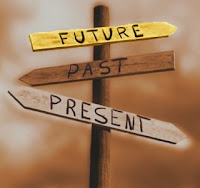
Last week we talked about Point of View so I thought this week it would make sense to talk about verb tense and how that affects the viewpoint choices we make.  The choices are pretty simple and there are only 2: past and present.  (Yes, there’s also future tense, but, really, have you ever seen an entire short story or novel written only in future tense?  If you have, please post in the comments and you will make my day.)

When it comes to tense in fiction writing, there’s one essential “rule” to remember: be consistent.  If you decide you want to write in present tense, stay in the present.  If you choose the past tense, stay in the past.

But how do you choose the verb tense to begin with?  The best way is to understand the benefits and limitations of both, then decide which one serves your story best.  Here’s a little cheat sheet to help you choose.

Present Tense
  • Immediacy – You feel like you’re right there with the main character.
  • Suspense –  This is especially important if your story is one where the POV character is in peril.  If the story is in present tense, the reader won’t know until the end if the POV character survives.
  • It Can Sound a Little Unnatural Let’s face it, present tense is relatively new in the world of fiction writing.  Our ears are more used to hearing stories told in past tense (e.g. “Once upon a time there was a…”)  This is not to say that all present tense sounds weird, but for some writers, it may not come as naturally and could end up sounding hokey or gimmicky.  The trick here is practice, practice, practice.
Past Tense
  • Distance – The narrator has more distance from the events in the story it because they happened in the past.  This gives the narrator some perspective about those events and allows the narrator to have some hindsight.
  • Location in Time Using the past tense, you also need to consider where the narrator is telling the story from.  (This is especially important if you’re using 1st person.)  Is the narrator an old man looking back on his early life?  Is she telling the story just after having lived it?  Depending on where the narrator is NOW, it can effect how he or she tells the story.
  • Less Suspense If you’re writing in 1st person or 3rd person limited and it’s past tense, the implication is that the POV character has lived to tell the tale.  In most stories, this is probably not a problem and won’t kill much of your suspense, but if your novel is all about whether or not the POV character survives, then past tense could lessen the suspense.

Choose wisely.  Be consistent.  And don’t tear the fabric of the space-time continuum.

8 Comments »

Iggi & Gabi - All rights reserved © 2010-2011

I am a HowJoyful Design by Joy Kelley