Here’s a quizzy for you. Answer the following questions, then count up your “Yes” answers and see your score below.
1) When your critique group says they don’t like your character, is what they’re secretly saying that they don’t like you?
2) When a colleague points out a flaw in your manuscript, do you immediately reply with an explanation why that flaw isn’t really a flaw after all?
3) You have 5 people in your writing group and they each have a different opinion about your WIP. Do you try to rewrite your project so that it fits all 5 suggestions?
4) When you send your manuscript to your critique partners, do you preface it by saying that the language is “coded” and that you’re going for something “post-modern”? (Meaning, of course, that if they don’t get it, it’s because they’re too dumb to get it and not because you were too dumb to write it like that in the first place.)
5) A corollary to #4, when you send your manuscript out, do you preface it by saying it’s really, really rough and you wrote it in two minutes on your iPhone while standing in line at the movie theater?
6) Do you refer to your manuscript as “your baby?”
7) Do you find it hard to sit through a critique without your favorite comfort food?
8) Have you ever cried after a critique but lied and told everyone it was because your hamster died?
9) When your short story gets rejected by an editor, do you take it upon yourself to write back and calmly explain why said editor is utterly and completely wrong?
10) You got critiqued by your writing group last week, got lots of suggestions for change and this week you come back with a manuscript that is… exactly the same. No changes made. Do you expect a glowing critique this time?
Count up your “Yes” answers and scroll down to see your score.
0 = You have a level head and you make the most of your critiques because don’t take anything too personally. You take notes and you know when to incorporate feedback and when to let it go. Keep it up and you’ll go far.
1 = OK, so you’re on the loopy side of normal, but you’re still pretty good about not letting critiques get to you. Sure, you might need to reward yourself for a tough critique session with some ice cream or even a good cry, but that’s fine. Just make sure you get home and close the shades before you do.
2-3 = You are a tricky one. Let’s face it. On one hand, you are a bit… how shall I put this… wacko. The thing that makes it so hard for your critique partners to deal with you is that you seem completely oblivious to this fact. Wake up! Stop writing like a lunatic. And start listening to what your critique partners tell you; they might actually be right.
4-5 = You are in need of a massive reality check. Here it is. Your book is not you. Your book is not your child. Your book is not a living being. Get over it. Now that we’ve made that clear, stop griping about how much everyone criticizes your work and focus on making it better.
6+ = Seriously? You seriously answered “yes” to six or more of the above? Wow. I don’t know what else to say, but… Wow. May I shake your hand?


 XI
XI
 Ordinary Objects Exercise: Take an ordinary object from your desk (a pencil or pen, paper clip, eraser, etc.) and close your eyes. Study it with your eyes closed, trying not to focus on what you know the object is, but on how the object feels.





 Call me Gabi (pronounced gah-BEE). I'm a writer, freelance teacher, and a lover of books and words. I'm also the instigator of DIY MFA. iggi's my sidekick, but he thinks he's the brains behind this operation.
 Writing Through the Senses: Sight
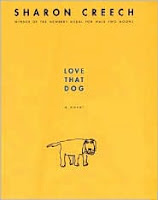 Verse Novel #1: Love That Dog
 VP Submissions Open Next Week
 Writing Through the Senses: Sound