30 Mar

DIY MFA Twitter Chats (and Some Twitter Tips)

Posted in DIY MFA, Twitter

Hi everyone!  Hope you’re all getting excited for DIY MFA starting this weekend.  Today, I just wanted to write a quick post to announce the schedule for DIY MFA Twitter Chats.

Starting in April, we’ll be chatting on Sundays from 5pm – 6pm EDT.  Each week I’ll have a topic and we can discuss, or we can talk about DIY MFA in general.  It’ll also be a time to debrief after the Saturday Writing Sprints and a great way to connect with other writers.

DIY MFA chats will use the hashtag #diymfa.

————————————————————————————————

For those who are new to twitter chats, here are a few twitter tips that have helped me navigate the world of twitter chats:

Use TweetChat: tweetchat.com allows you to enter a hashtag and then it opens that hashtag in a new window, sort of like a chat window.  It’s got some great features like it bolds tweets with your @username on it and your own tweets so if there are multiple threads in the chat, it’s easier to follow.  It also automatically adds the chat hashtag to your tweets.

Remember, Twitter Chats are not Chat Rooms:  In a generic chat room, everyone who sees your posts is also involved in the chat, but this is not true for twitter chats.  The trick to tweeting effectively during a chat is to make your tweets specific to the chat but also broad and detailed enough so that if someone sees it out of context it could still make sense.  Of course, it’s impossible to do this with all your tweets, but you should try to avoid strings of tweets that look like this:

@person1: OMG! Awesome!
@person1: @person2  Totally agree.
@person1: @person3  Yeah, me too.

This is where using Retweets can help give your tweets context.  Like this:

@person1: OMG! Awesome! RT @person2 Just finished my novel!
@person1: Totally agree.  RT @person2 Writing a novel is hard.
@person1: Yeah, me too.  RT @person3  I wish I had finished my novel already. Taking too long.

Don’t be shy.  Jump in.  Tweeps are nice peeps.  Don’t let a chat full of people who know each other make you nervous.  Just say hello and jump into the conversation.

Forgot to add this when I first posted but will add it now:

Anyone else have other advice for twitter chat newbies?  Also anyone who’s done a twitter chat: can you tell us which ones you’d recommend?

(I’ll share my #chat picks in the comments.)

7 Comments »

29 Mar

Introducing: DIY MFA TA’s!

Posted in DIY MFA

Before I get to the main topic of this post, I wanted to remind you all that DIY MFA 2.O is only a few days away and you can register for it by going to this post.  It’s free to register and not only will you get a free DIY MFA eWorkbook but you’ll also be entered for a chance to win an iggilicious prize!

And now for the main topic: I’ve decided to assemble a team of TA’s (Teaching Assistants) for DIY MFA.  These are people who either participated in DIY MFA last time and were very active in the community, some even have official MFAs.  These are folks who have brainstormed with me and helped me work out kinks in the program, to such an extent that they could practically teach it themselves.

Throughout DIY MFA 2.O, the TA’s will be active in the comments and chats.  These people are here to help, so don’t be shy about following them on twitter, visiting their blogs and asking questions.  Here’s a short intro to the TA’s and a little bit of what they have to say about DIY MFA!

J.C. Martin

“As a new-ish writer, last year’s DIY MFA really helped me with getting to grips with writing techniques and ideas! I’m sooo looking forward to DIY MFA 2.0! This time round, I’m hoping to perhaps learn how to really boost my writing productivity!”

You can find J.C. at her website or on twitter (@JCMartin_author). 

Kerryn Angell

“After spending five years pursuing writing for publication and two years editing the same WIP I was lost. DIY MFA opened my eyes to the variety writing has to offer: reading, craft, ideas, community and critique. I fell back in love with reading, connected with my local writing community in person and found a renewed focus and excitement to write.”

Check out more of what Kerryn has to say at her blog and on twitter (@kerrynangell).

Ghenet Myrthil

“Since graduating with an MFA last spring, I’ve been working hard on my first book, a contemporary YA novel. Writing in the “real world” without the structure and support of an MFA program has been a challenge. That’s why I’m excited about DIY MFA 2.0! I look forward to connecting with other writers, feeling inspired and getting a much-needed boost to finish my book.”

You can find Ghenet blogging, tweeting (@ghenet) and drinking lots of chai tea lattes.

Dave Symonds

“Last fall I benefited most from the Love of Literature posts and was able to put together a solid reading list.  Organizing a reading list helped me get on a reading schedule; not only was I reading more books similar to my WIP, but I was also able to keep up with the latest and greatest in my genre. I’m looking forward to the craft posts this time around, putting writing exercises to good use and improving my WIP on a daily basis.

Read more of Dave’s words on twitter (@davidiocy).

Thank you to all the TA’s for helping me with this project.  Looking forward to a great month this April!

6 Comments »

28 Mar

DIY MFA 2.O Registration

Posted in DIY MFA


OMG there are so many exciting things I want to tell you all, I don’t even know where to start.  First, DIY MFA 2.O is only a few short days away and as of today, registration is OPEN! 

Exciting Thing #1:
Everyone who registers for DIY MFA 2.O will receive a free DIY MFA eWorkbook.  This workbook contains a sampling of some my DIY MFA “greatest hits” along with new material, including worksheets that are completely new to DIY MFA!  Just fill out the form and I’ll email you the eWorkbook.  (Please allow 1-2 weeks.) 

Exciting Thing #2:
As with the last DIY MFA, everyone who registers will also be entered in a giveaway!  This time around I’ll be giving away five (5!) adorable iggi journals to five lucky winners.  These iggilicious journals will look a little something like this:

Here are the rules for the giveaway:

• Please sign up using the form below.
Giveaway ends at 11:59 EDT on April 30, 2011.
• Everyone who signs up before the closing date automatically gets one entry in the giveaway!
• For extra entries you can:
     1)  Tweet about DIY MFA Registration between today and Friday (+1 entries per tweet for up to 5 tweets).  Don’t forget to include a link back to this post and to use the #diymfa hashtag!
     2)  Post a badge on your website or blog with a link back to this registration post (+2 entries).  Don’t forget to enter your blog or website URL on the form.  You can find badges on the iggi-Graphics page.
     3)  Write a post on your blog about DIY MFA this week (+3 entries).  Again, please include your blog URL and please link back to this post.

OK, so just fill out the form and you’ll automatically get a free copy of the DIY MFA eWorkbook and you’ll be entered for a chance to win an iggilicious journal!

Edit: Contest is now closed.  But you can still sign up to get a free workbook by joining the DIY MFA List.  Don’t worry, you won’t get spam and I won’t share your email address with any person or entity.  All you’ll get is the occasional DIY MFA update and the free workbook (please allow 5-7 days).

4 Comments »

25 Mar

YA Cafe: 5 Ways Romance Can Enhance a Story
Posted in Literature, Reading, Teen Lit, YA Cafe

Welcome Back to YA Cafe, where book lovers can gather and chat about teen literature.  I’m your barista, along with Ghenet from All About Them Words.

Each Friday we pick from a menu of topics and share our thoughts on our respective blogs.  We’ve also got plans brewing for interviews, events and even some exciting giveaways, so stay tuned!  Join the discussion by responding in the comments, on your own blogs or on twitter using the hash tag #yacafe.

Today’s Special:  Why does romance matter in YA?

5 Ways that Romance can Enhance a Story (YA, or not):

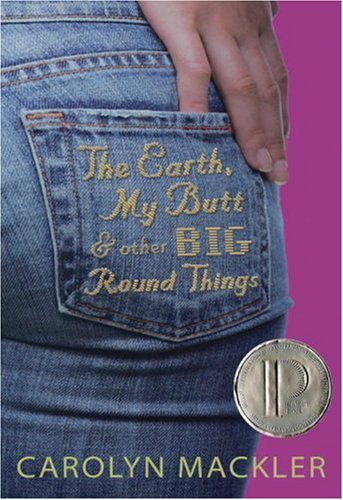
1) It creates conflict.  From Judy Blume to Carolyn Mackler, authors know that adding a romantic interest to a story is a great way to add conflict.  Even if the story itself is not about the romance, having romantic tension can add an element of conflict to the plot.  Take Mackler’s The Earth, My Butt and Other Big Round Things for example.  In this book, the main issue revolves around the protagonist’s self-image and her relationship to her family, but her tension with “the boy” helps add an extra conflict.

2) It offsets violence or sadness.  In books where violence (The Hunger Games) or sadness (If I Stay) are central to the story, having a romantic element brings in a breath of fresh air amidst the pain.  In The Hunger Games moments between Peeta and Katniss give the reader a little break from the constant chaos of the violence.  In If I Stay, the deep sorrow that fills the book is offset by happier flashback moments between the protagonist and her boyfriend.

3) It raises the stakes.  Again, The Hunger Games is a perfect example.  Until Peeta declares his love for Katniss, the main conflict in the story is “Will Katniss win the Hunger Games and survive?”  But the minute we start liking Peeta and we realize that he’s willing to sacrifice himself for Katniss, the stakes get higher.  According to the rules, there can’t be two winners in the games, so for Katniss to survive Peeta will have to die.  Voila!  Higher stakes.

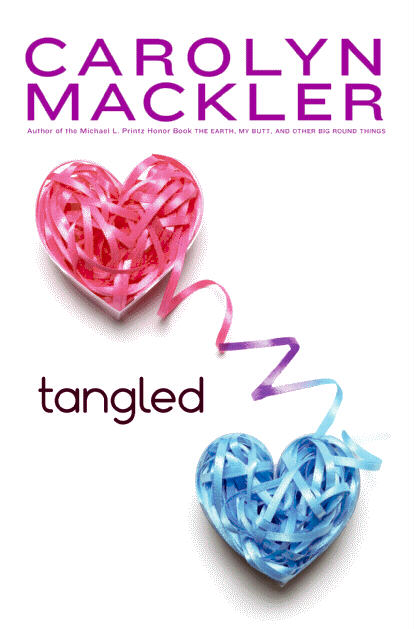
4) It helps make less sympathetic characters sympathetic.  This one was tough to find examples to illustrate, but Dakota in Tangled is a good example.  When we first meet him, he seems cruel and manipulative but as the story develops, we learn details about his romantic life that explain his manipulate behavior.  His budding relationship with a new woman adds depth to his character and makes him more sympathetic.

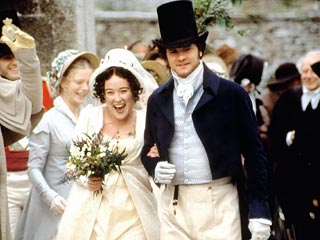
5) Even if we know how it will turn out, we still keep reading.  I call this the Pride and Prejudice effect.  Sure, we know almost immediately that Lizzy and Darcy will end up together, but we keep reading.  The interest isn’t in what will happen, but how.  Unlike any other element or genre in literature, romance is the only one that can be completely predictable and yet will still keep us reading.

Want to read more about romance?  Fellow barista, Ghenet shares her thoughts on her blog: All About Them Words.  Check it out, then tell us why romance in YA matters to you.

6 Comments »

Iggi & Gabi - All rights reserved © 2010-2011

I am a HowJoyful Design by Joy Kelley