30 Apr

Revision Ritual

Posted in Process, Writing

I’ve heard that some writers have weird rituals that get them into writing.  They light a candle, turn on  music, wear a certain article of clothing.  I myself don’t have writing ritual but I do have one for revising: I wear a CTU baseball cap.  What is CTU and why would I wear this cap, you ask?

In order to answer that question, I should give you a little background on the world of 24.  This show–which is supposed to take place in “real time” over the course of twenty-four hours–follows main character Jack Bauer, an agent at the Counter Terrorist Unit (CTU), as he runs around shooting things and saving the country from impending disaster.  I’m not saying this is a Great-show-with-a-capital-G, but it’s a guilty pleasure of mine and it’s fun to watch.

The reason for the CTU cap is urgency.  One of the things that makes 24 so gripping is that in the world of the show, all life as we know it could end at any moment.  The same is true in revision.  I feel like when I’m revising it’s really easy for me to let urgency flag and get caught up in endless tinkering.  Wearing my CTU cap reminds me that revising is just as urgent and full of energy as writing a first draft.

It also reminds me of phrase “kill your darlings.”  I envision myself as a CTU agent who’s shooting down all the tired phrases and cliches in my text.  Just as Jack Bauer has to make tough choices and sacrifice people he cares about for the greater good, so it is with writing.  Sometimes you have to remove your favorite character or kill your favorite scene to make a better piece as a whole.

Now I pose this question to you: do you have any writing rituals?  If so, what are they?

3 Comments »

26 Apr

Yes, You can Play with These Matches

Posted in Book Reviews, Writing, Writing Exercises

Looking over the last several reviews I’ve done, I realized that they are heavily weighted toward books about writing.  In part this is because I love reading about craft or reading authors’ advice to new writers.  At the same time, since the semester is drawing to a close–and with the end of semester comes my thesis deadline–I haven’t had nearly enough time to read fiction as I would like.  So today will be another writing book and with luck, by two weeks from now, I’ll be done and ready to start reading for fun again.

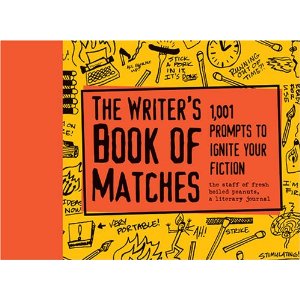
This week’s book is The Writer’s Book of Matches by the staff at Fresh Boiled Peanuts.  This book is a collection of writing prompts that range from the normal to the absurd to the hilarious.  There are 1001 prompts so even if you did one each day, it would take you three years to get through the book.  At the end, the editors include a handy-dandy guide on how to reuse the prompts and keep them fresh.  Overall, this book has the essentials for a useful writing book.  There’s plenty of variety and it’s small so it’s easy to carry when writing on the go.

Comments Off on Yes, You can Play with These Matches

21 Apr

An Ode to My Fellow Writers

Posted in Writing, Writing Exercises

Recipe for a Writers’ Group

  • 1 notebook
  • 1 pen
  • 5-6 fellow writers
  • meeting space with good ambient noise level and coffee

Time required: 2 hrs.

Instructions:
     Begin with 10 minutes of catching up and group business.  Share your successes.  Give encouragement.  Mix in some writing exercises, maybe read a poem or two.  Discuss, then set aside.
     Separately, begin preparing the critique portion.  Always add positive feedback first, then constructive criticism.  Add a cup of supportive comments for every dash of the negative.  Then sprinkle in a pinch of suggestion and a teaspoon of creative problem-solving.
     Fold together with the original mixture.  Spread in a baking pan and let incubate for about a week.

Serves: 6-7 writers

To my fellow writing friends: your support and encouragement help me concoct my best literary feasts.  Thank you.

One comment »

20 Apr

Catastrophic Success

Posted in Literature, Writing

I love stories like this:

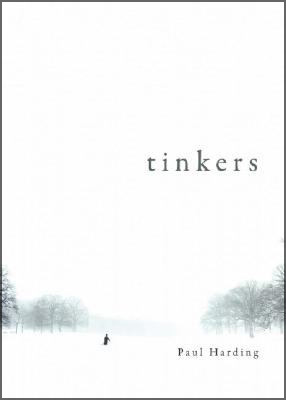
Paul Harding–a writer and graduate of the Iowa Writer’s Workshop–had what the New York Times refers to as “a quiet little novel he wished to publish.”  After sending it out to several agents and editors, he got one rejection after another until… a small press (Bellevue Literary Press) picked it up.  And guess what?  This “quiet little novel” has now won the Pulitzer for Fiction.

The cover story in the arts section of yesterday’s New York Times (Monday, April 19) tells the story in detail, but my favorite line is the last one.  When asked about his upcoming work, Harding said:  “I sort of feel like I know how I got here, every step of the way….  Something like this can befall me and it won’t be catastrophic success.”

iggi says…

Which brings us to the heart of this post.

Catastrophic success.  What a seeming paradox, and yet it rings so true.

How easy it is for writers to take one success and let it cripple them into paralysis.  I know this happens to me every time I let someone read my work.  The more they ooh and ah, the heavier my fingers feel next time I get to the keyboard.  In fact, I find that success can be more deadly to my motivation than failure.  After all, failures–even colossal ones–end up motivating me into writing because I want to fix the problems.  But if all I get is success–even if it’s a tiny one–it means there’s nothing to fix.  And this is where I stagnate.

I think this is why many writers get stuck or hit “the wall:” they show their work too soon.  Earlier this semester, I resisted showing my Master’s thesis to anyone (even my peer group and my adviser) because I knew whatever came of it would not be good.  Criticism would psych me out and good comments would make my motivation fizzle.

More importantly, though, I needed to have a heart-to-heart with the book.  It took a lot of different tries and beating my head against the wall to understand what was going on in this book.  Now that the book and I have resolved our differences, I’m finally ready to hear what other people have to say.

In the end, it all comes down to trust.  The writer must trust her readers not to abandon her mid-story.  She must trust the writing to mean what she’s trying to say.  And she must trust herself to view the work with clarity.

Comments Off on Catastrophic Success

Iggi & Gabi - All rights reserved © 2010-2011

I am a HowJoyful Design by Joy Kelley