
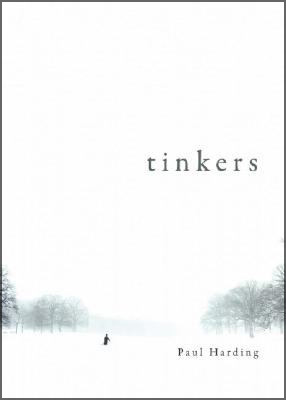
I love stories like this:
Paul Harding–a writer and graduate of the Iowa Writer’s Workshop–had what the New York Times refers to as “a quiet little novel he wished to publish.” After sending it out to several agents and editors, he got one rejection after another until… a small press (Bellevue Literary Press) picked it up. And guess what? This “quiet little novel” has now won the Pulitzer for Fiction.
 The cover story in the arts section of yesterday’s New York Times (Monday, April 19) tells the story in detail, but my favorite line is the last one. When asked about his upcoming work, Harding said: “I sort of feel like I know how I got here, every step of the way…. Something like this can befall me and it won’t be catastrophic success.”
Which brings us to the heart of this post.
Catastrophic success. What a seeming paradox, and yet it rings so true.
How easy it is for writers to take one success and let it cripple them into paralysis. I know this happens to me every time I let someone read my work. The more they ooh and ah, the heavier my fingers feel next time I get to the keyboard. In fact, I find that success can be more deadly to my motivation than failure. After all, failures–even colossal ones–end up motivating me into writing because I want to fix the problems. But if all I get is success–even if it’s a tiny one–it means there’s nothing to fix. And this is where I stagnate.
I think this is why many writers get stuck or hit “the wall:” they show their work too soon. Earlier this semester, I resisted showing my Master’s thesis to anyone (even my peer group and my adviser) because I knew whatever came of it would not be good. Criticism would psych me out and good comments would make my motivation fizzle.
More importantly, though, I needed to have a heart-to-heart with the book. It took a lot of different tries and beating my head against the wall to understand what was going on in this book. Now that the book and I have resolved our differences, I’m finally ready to hear what other people have to say.
In the end, it all comes down to trust. The writer must trust her readers not to abandon her mid-story. She must trust the writing to mean what she’s trying to say. And she must trust herself to view the work with clarity.


Comments Off on Catastrophic Success





 Call me Gabi (pronounced gah-BEE). I'm a writer, freelance teacher, and a lover of books and words. I'm also the instigator of DIY MFA. iggi's my sidekick, but he thinks he's the brains behind this operation.
 5 Writing Lessons from the 4th of July
 YA Cafe: Sweethearts Giveaway Winner!
 Stories for Sendai
 What Makes a Book Educational?
