30 Aug

What’s your Holy Grail?

Posted in DIY MFA, Goals, Process

As we gear up for DIY MFA, we’ll be talking a lot of about goals.  Yesterday we focused on operational definitions for our goals (i.e. small concrete and measurable steps that represent the bigger, abstract goal).  Today we’ll be emphasizing the flip-side of that idea, namely the Holy Grail.

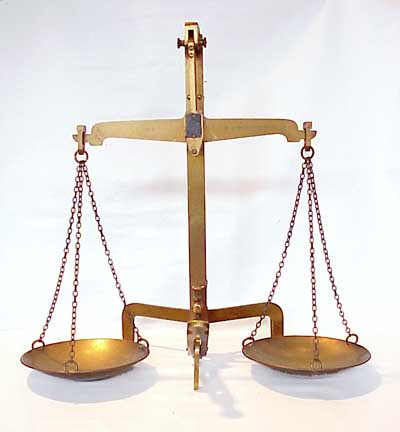
What’s a Holy Grail, you ask?  It’s that elusive dream, that unbelievable quest that shapes all your creative goals.  Julia Cameron (of The Artist’s Way) calls this her True North.  I call it my own personal Holy Grail.  It doesn’t matter what words you give it, the idea is the same.

Two people might have similar goals but a very different Holy Grail.  For instance, two writers might both want to get published but to one, the Holy Grail is winning a Pulitzer while to the other the Holy Grail might be getting on the NYT Bestseller list.  Notice how both writers have parallel small goals (getting an agent, editor and having their book published) but ultimately the differences in their Holy Grails will shape how they approach these intermediary steps.  Even if they never reach that ultimate goal, the Holy Grail will influence the goals that lead up to their ultimate success.

But wait, you say.  Didn’t we just spend all of yesterday figuring out small, concrete, manageable goals?  Are we supposed to give up on those all of a sudden and go after wild and crazy dreams?

No.

Here’s the secret: The Holy Grail shapes your goals, but it doesn’t define them.  So go ahead, dream big.  Let your mind go through all those fanciful scenarios you would never admit to anyone.


Your task for today:  What’s your Holy Grail?  Write it down and post it somewhere where you can see it every day.  Here’s mine.

10 Comments »

29 Aug

Measuring Success

Posted in DIY MFA, Goals, Process

One topic that we’ll come back to many times in the DIY MFA is this idea of measuring success.  Unlike a typical MFA, where you can measure your success through grades, a diploma or post-graduation opportunities, the DIY MFA is, by definition, un-measurable since different people would consider different things to be “success.”

This brings me to a concept that I first learned about in Psychology 101 in college: Operational Definition.  In psychology, you’re usually dealing with outcome variables that are very abstract and difficult to measure.  Stress.  Anger.  Fear.  Part of the reason these variables are so hard to measure is because different people experience them in different ways.  It’s up to the psychologist to find another variable–one that’s concrete and easy to measure–to approximate the variable we really care about.

For instance, you can’t ask a bunny if it’s hungry because it’s a bunny and it doesn’t speak English.  You can, however, count how many carrots it eats in a given time period.  More carrots = more hungry.

Similarly, while you can ask human subjects if they were hungry (say on a 1-10 scale), you could run into problems.  First: what might be a 4 on the scale for one person might be a 2 on a hunger scale for someone else.  Second: people sometimes lie.  If, however, you give everyone the same “snack” during the experiment and then secretly measure how much food is left at the end, you can have a reasonable indicator of who was hungry and who was not.  When you spread that data over a large sample, you can account for individual discrepancies and your concrete measure (weight of leftover snack) actually becomes a very good indicator for your abstract variable (hunger).

OK, I didn’t mean to get overly technical, but there’s a reason I’m going into all this detail.  The fact is, DIY MFA success is an abstract outcome variable, making it difficult to measure.  If we set smaller, concrete goals, on the other hand, we can have a pretty good indication of whether we’ve succeeded or not.  As we work on putting together our DIY MFA individualized programs, remind yourself to keep your goals concrete.

Why is it so important that goals be concrete?

  1. Abstract goals are hard to measure.  Telling yourself “I’m going to become a better writer” is all well and good, but how will you know when you get there?  Instead, you could try: “I’ll write and edit three stories in the next three months” or “I’ll submit one story to 10 literary magazines.”  Then with a simple checklist you’ll know if you’ve succeeded or not.
  2. Vague goals are scary.  OK, maybe I’m more of a wimp than most people but nothing freaks me out more than a vague goal.  If the goal is too amorphous, it’s easy to get overwhelmed, but if the goal is concrete, it automatically becomes more doable.  “Write a novel someday” sounds scary.  But “write five pages a day”?  Well, I know I can write 5 pages today and I guess I could do it tomorrow too and probably the next day… and you get the idea.
  3. Checking things off the list feels good.  If you’re measuring success with small, concrete goals, it means you get to check things off the list more often than if you look at it as just one vague goal.  If you look at success as one big goal, then that’s only one thing you get to check off the list but think of how many checks you’d get if you broke down that goal into small, concrete goals.
  4. Concrete goals make it easier to track your progress.  Say your goal is to write a novel, but you break it down to 5 pages per day, six days per week.  That means, in 8-10 weeks you should be pretty close to finishing the whole thing.  If you stick to your weekly goals, you should have a good measure of how close you are to finishing your progress.

During DIY MFA month, I want to accomplish the following abstract goals (broken down into concrete goals):

  • Finish my novel (8 chapters left – 2 chapters or approx. 4000 words per week words for 4 weeks)
  • Read more (one book per week for 4 weeks)
  • Submit a short story (Submit A.H. to 5 markets per week for 4 weeks, total of 20 magazines)

What abstract goals can you break down into concrete goals for DIY MFA?

6 Comments »

28 Aug

School Supplies

Posted in DIY MFA

I love buying school supplies.  Love it.  Love everything about it, from searching bookstore after bookstore for the perfect notebook to trying out a hundred different pens (ballpoint, gel rollers, fountain pens….)

The Basics

As you prepare to put together your DIY MFA, you may want to consider treating yourself to a few simple school supplies:

  • Notebook where you can take notes and store away your ideas
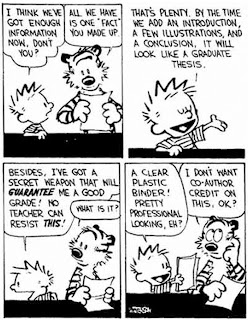
  • Folder to hold your DIY MFA lists and assignments
  • Writing implement of your choice

Every writer has probably spent way too many hours at their office supply store or bookstore, ogling the pretty notebooks and dying to play with the pretty pens.  I am not advising that you spend an entire weekend hunting for school supplies, otherwise you’ll have no time left for writing.  Just find a system that works for you and then stick to it.  After much trial and error, I’ve come up with a system of my own and now I keep some backup supplies so that I always have extras on hand.  You know, in case there’s a blizzard.  Or a blackout.  Or a sudden shortage of fountain pens.

Notebook: This is where I do most of my writing when I’m away from the computer.  I’ll even use it instead of the computer from time to time, just to shake things up a bit.  It’s small enough to fit in my purse but big enough so I don’t get hand cramps trying to write in it.  I used to be a die-hard moleskine fan, but now I’ve actually converted to the ecosystem variety because I find them to be more lightweight.  Also I like the pretty colors.  The medium one is the perfect size for me and, of course, I always go for the unlined styles because sometimes I like to write sideways or draw diagrams.

Folder: Conferences are a great place to get pretty folders.  I reuse my SCBWI conference folders over and over until they fall apart. Don’t be afraid to get whimsical with these.  If cartoon characters or unicorns are more your style than “serious” solid-colored folders, then go for it.  Have fun.

Pen: My choice in writing implement is the only thing that’s stayed pretty constant since I first started writing seriously.  Pilot Varsity fountain pens.  Dark blue.  This may seem super-finicky but there is a method to this madness, I promise you.  I need a fast pen that writes with little pressure (hence the fountain pen choice) and because I make notes in the margin of my manuscripts and I want to be able to spot my comments quickly (hence the blue rather than black ink).

Other Fun Supplies

Stickers: I’m a firm believer in stickers.  I keep a bunch of stickers on hand and give myself a gold star or a smiley after a writing job well done.  I know it sounds infantile, but it helps me keep my mood light and puts my writing in perspective.  If writing well is all about gold stars and smiley faces then it’s not really a big deal.  And if it’s not a big deal, then it stops being scary.

Mascot:  Every writer has a mascot, whether they’re aware of it or not.  To tell the truth, I have several mascots, but in the interest of time rather than describing them, I’ll just show you my two favorites.

The knitted cactus plant was something I found in a flea market when I was eleven.  I got it because it was the only kind of plant that I wouldn’t be able to kill (trust me, I was terrible with plants.  Still am.) I carried the cactus with me all through middle school and high school, took it with me to all my exams, even took it to college with me.  The pink alien is more recent, designed and made by a friend back when I was in design school.  And yes, the pink alien is picking his nose with his tongue.  So gross and yet so funny!

10 Comments »

23 Aug

I’m Ba-ack!

Posted in DIY MFA

Hello all,

I’m back from Ireland and wow, does it feel weird.  I’m a little discombobulated, mostly because of jet-lag but also I’m experiencing withdrawal from my morning dose of porridge with honey cream.  Note to self: microwaveable oatmeal with honey does not equal porridge with honey cream.

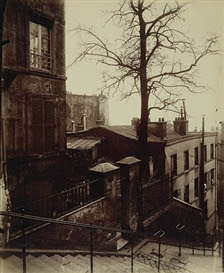
The photo on the left is from the Aran Isle of Inis Mor (Inishmore) off the west coast of Ireland, and one of my new favorite places in the world.  I’ll post more pictures once I’ve had a chance to sort through them all, but I thought I’d share this one because it’s one of my favorites.

So, today I thought I’d address some more questions regarding DIY MFA.

Question: What sort of work will we need to do in September during the classes or is September the time to absorb information?  How much time should we allow each week for each class?

Answer:  I see September as being a time to absorb information and start putting together your DIY MFA plan.  After each blog post, I’ll give one or two short assignments and people can either do them right away or come back to them later on as they build their DIY MFA.  For instance, when we talk about reading the literature, one assignment might be to assemble a reading list for yourself (we’ll talk about what sorts of books should go into that list when we cover that topic in Love of Literature).  In Craftivity, for instance, an assignment might be to try out a technique covered that day in the post.  You get the idea.

Unlike classes in a standard MFA, those in DIY MFA are more about absorbing information and putting together a plan.  Then, when you’re ready, you put the plan into action.  As I’ve mentioned before, the real work in DIY MFA happens after September.  iggi-U is just the preparation, after that, it’s all up to you.

Question: Is there going to be a space for iggi-U grads to share their DIY MFAs as we put them together are then work through them?

Answer:  Funny you should ask.  I’ve been using the hashtag #diymfa on twitter when I post updates about iggi U, figuring it would make it easier for iggi U tweeps to find the info.  That could certainly be a space where people can share their DIY MFA experiences and get in touch with each other.  I was also thinking we could use #diymfa after September to do twitter chats and such so people can give updates on how they’re doing, etc.  Sound good?

Thanks to Kerryn Angell for these great questions!

2 Comments »

Iggi & Gabi - All rights reserved © 2010-2011

I am a HowJoyful Design by Joy Kelley