08 Mar

Coming Soon: DIY MFA 2.O

Posted in DIY MFA

That’s right, DIY MFA is coming back in April for another month-long spree of writing fun!  For those who aren’t familiar with the Do-It-Yourself MFA concept, you can visit iggi U and check out posts from our first extrabloganza last September.

DIY MFA 2.O will be all about getting the creative juices flowing.  Didja notice that it’s the letter O and not a zero?  That’s because the O stands for ORACLE, which will be a huge part of this new version of DIY MFA.

What’s the ORACLE, you ask?  The ORACLE is a place where writers go to commune with the muse.  The acronym stands for: Outrageous, Ridiculous, and Absurdly Creative Literary Exercises.  Remember how in ancient times, people would go visit an oracle to get answers to life’s problems?  This is sort of the same idea except this ORACLE helps you bust your way through writer’s block.  No, the ORACLE won’t write your book for you, but it does put you in touch with awesome ideas and scrumptious stories buried in your brain.

In this new version of DIY MFA, we’ll be focusing on bringing some of those stories-to-be out of hiding.  We’ll build a secret stash of writing ideas so that when you’re under pressure to find new stories, you’ll have somewhere to go where you can find them.

But I’m getting ahead of myself.  First things first.  Over the next few weeks, I’ll be fine-tuning my plan for April and I needed some input from you all.  I want to know what you think worked and didn’t work about DIY MFA in September, and what you want to see more of DIY MFA 2.O.  And, if you didn’t participate in September, I want to hear from you too.  My goal is to make this the best DIY MFA yet,  just for you.

Please share your iggilicious thoughts in the form below.  If you have more detailed comments to add, feel free to leave them in the comments section.  Thank you!

2 Comments »

07 Mar

Writing Lessons from My Violin

Posted in Music, Process, Writing

I have a love-hate relationship with my violin the same way I have a love-hate relationship with writing.  There are many similarities between my writing life and my violin life.  In fact, lot of important lessons I’ve learned about writing, came from playing the violin for so many years.

1)  Practice your scales.  Anyone who plays an instrument has spent hours (maybe even days) practicing nothing but scales, arpeggios and etudes.  Why do we bother with all that pointless stuff?  I mean, it’s not like I’d ever perform my C# melodic minor at a recital.  Doesn’t it defeat the purpose of practicing something if you’re never going to perform it?

On the contrary, it’s important to find time for scales even if it means the thing we’re practicing won’t “pan out” or “become something” later on.  In writing, I’ve learned that even if a book or story doesn’t reach the ready-to-submit stage, that doesn’t make it any less worthy than projects that have.  This is why it’s important build some time into our writing schedule for scales… er, I mean writing exercises.

2)  Do not practice in public.  As a kid, I used to hate it when I’d go to music school and the other kids would hang around before class and noodle on their violins.  I call this faux-practicing.  It isn’t real practice because real practice doesn’t look so effortless and flashy.  Faux-practice is showing off; it’s performing but making it look like practice.  How do I know this?  Because every musician knows that real practice is not something you do in public.  Real practice is embarrassing and messy and downright ugly.  And it’s best kept behind closed doors.

When it comes to writing, I often have that impulse to let people see my work when it’s still in the “practice” phase.  I suppose I let people into my practice space prematurely because otherwise they won’t believe I’m actually writing.  The violin kid inside has helped me gain the strength to tell people: “Back off.  I’ll show you when I’m ready.”

3)  Sometimes you have to suck it up and do it.  Every morning from the age of 4 on, I would spring out of bed and say to myself: “Aw yeah!  I get to practice the violin today!”  And if you believe that then I’ve got some beautiful ocean-front property in Nevada that I’d like to sell you.

Playing an instrument–much like writing–is one of the ultimate tests of delayed gratification.  After all, you spend endless hours alone in a room, practicing for a goal that could be months or years away.  The only thing that gets you through is knowing that the when you reach the prize at the end, it’s going to be worth it.  Otherwise, why would you torture yourself like this, right?  The answer lies in lesson #4.

4)  You have to love the work, even if it’s only some of the time.  If you don’t, you will be miserable.  After all, what if the end-goal turns out not to be as great as you expected?  Or what if you get on that stage and screw up so royally you can never show your face in music school again?  While it’s important to grit your teeth and practice toward a goal, you also need to love the practice in and of itself.  Sure, I was never one of those kids who practiced until her fingers bled or her parents tore her away from the instrument, but there was a certain satisfaction that always came from a productive practice session.

Same with writing.  Of course you want to have some lofty dreams or goals to keep you motivated but in the end, if writing is painful for you, then maybe you should consider something that brings you more joy.

Because it all comes down to joy.  I write for those moments when the story suddenly clicks and makes sense or when characters surprise me.  I write even in those times when it seems more like work and less like fun.  I write because sooner or later, it stops feeling like practice and starts feeling like joy.

What about you?  What is it about writing that gives you joy?

6 Comments »

05 Mar

YA Cafe: Cover Love

Posted in Literature, Teen Lit, YA Cafe

Welcome Back to YA Cafe, where book lovers can gather and chat about teen literature.  I’m your barista, along with Ghenet from All About Them Words.

Each Friday (Saturday this week, sorry!) we pick from a menu of topics and share our thoughts on our respective blogs.  We’ve also got plans brewing for interviews, events and even some exciting giveaways, so stay tuned!  Join the discussion by responding in the comments, on your own blogs or on twitter using the hash tag #yacafe.

Today’s Special:  What covers do you love?

I’ll admit it, I’m quick to judge a book by its cover.  If a book looks cheesy or too “teeny-boppery” from the cover, I’m likely to set it back on the shelf.  I like high-concept covers.  You know, covers that capture what the book is about without spelling it out completely.  I love when designers use type in a clever way or play with photography.  Not to mention, I love book covers that I can read on the subway without people wondering “why is she reading that weird book?”

But enough about what types of covers I love; today I’m going to talk about something I don’t love.  I profoundly dislike it–dare I say, hate?–when perfectly good hardcover designs get replaced with schmaltzy paperback designs.  Here’s what I mean: (hardcovers on the left, paperbacks on the right).

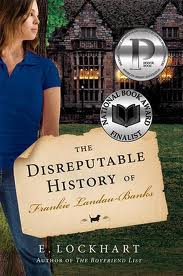
Isn’t this hardcover gorgeous?  It makes me just want to peel that wax seal open and read the book.  Also, small details on the cover link to elements of the story.  (That basset hound embossed in the seal is there for a reason.)  As the I read the story, I was delighted to notice the significance of these details.

Now check out the paperback redesign.  It looks so blah, so generic compared to the hardcover.  Sure, it’s got those shiny award stickers on it, but couldn’t they have put the stickers on the original and still used that design?  Not to mention, talk about a cluttered design.  I am not a fan.
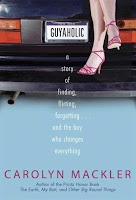
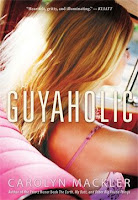
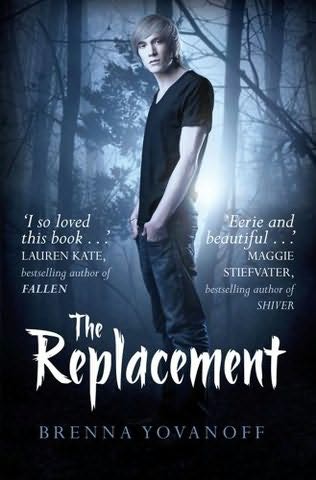
Lest you think the only reason I dislike some covers is because they have people on them, here’s an example of a hardcover-paperback pair where both show a person (in this case the protagonist).  One works for me, one doesn’t.  Take a wild guess which is which.

What I don’t like about the paperback is that we see a bit of the character’s face and hair.  It leaves less room for the reader to imagine what that character looks like than does the hardcover.  The hardcover, on the other hand, gives us some hints but doesn’t show us the character’s face so a lot is still left to the imagination.

In terms of layout, the hardcover is a much cleaner, tighter design.  You can barely read the title on the paperback cover and the author’s name practically disappears.  I might be going out on a limb here, but isn’t the whole point of the cover for readers to be able to recognize the book?  If so, wouldn’t it be crucial for the title and author’s name to be readable?
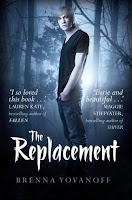
Of the covers I’m discussing today, this is the only one where I haven’t read the book yet.  If I saw these two covers on the shelf side-by-side, I would definitely reach for the hardcover and wouldn’t even look twice at the paperback.  I mean, how unbelievable is that hardcover?  It’s so disturbing and haunting and shows me what the book is about without telling the whole story.  It’s deliciously creepy!

The paper back, on the other hand… um, seriously?  I don’t even know what to say because this cover is so opposite to the essence and core of the hardcover.  All I know is that this looks generic and cheesy; this cover has no personality whatsoever.  I actually had to double-check to make sure these were covers for the same book because when I first saw them, I thought they couldn’t possibly be telling the same story.

In the end, I don’t understand why publishers feel they have to change these gorgeous hardcovers and replace them with generic-looking mass-market-y designs.  Wouldn’t it be an added cost to redesign a cover?  (i.e. Investing more designer hours into the project, not to mention a possible photo shoot for new cover images.)  If they already have a beautiful cover that works, why redesign it to make it uglier and less appealing?  Or maybe these redesigns do have some appeal to teens–though I doubt it because teens are generally way smarter than adults and they wouldn’t fall for gimmicky bells and whistles like these.  I’m really perplexed about this, so someone please explain it to me because I just don’t understand.

Still craving more YA-licious book covers?  Fellow barista, Ghenet shares her thoughts on her blog: All About Them Words.  Check it out, then tell us what covers you love!
8 Comments »

03 Mar

Infringement, Fair Use and Derivative Works

Posted in Legally Speaking, Writing

One issue that comes up a lot for writers is whether we can use some piece of another artist’s work in our own work.  The answer is: it’s complicated.  There are three things at play that you would have to consider: infringement, fair use and whether or not what you’re doing is considered a “derivative work.”  Here’s a quick rundown of these technical terms.

Infringement is when you take someone else’s work or idea and use it as your own.  Fan fiction would often be considered infringement because you’re taking characters that were created by another author.  Sure, you can write it for fun in the privacy of your home, but you won’t be able to sell it.  Note also that just changing a few small details is not enough to make a character or a story your own.  There is an exception to infringement, though, and it’s called “fair use.”

Fair use is what you use when you write an English paper and you need to use quotes in the paper.  You’re not paying the author you’re quoting for the right to use his or her words, but because you’re only using a short snippet and you’re using it for academic purposes, it’s OK.

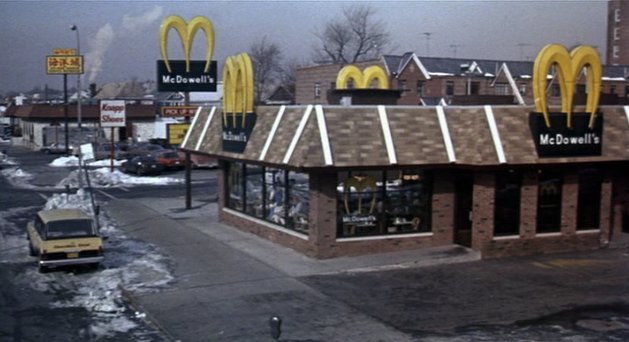
There is another case where fair use comes into play and that’s with humor.  If you’re imitating an existing story or brand but are doing so as a parody, you may be able to claim “fair use.”  One example is the imitation of McDonald’s brand in the movie Coming to America.  The imitation restaurant is called McDowell’s and it serves the Big Mic and Chicken Nukkets.  In this case, the very similarities between the real and imitation brands is what’s being played for laughs.*

Derivative Works are any works derived from the original work.  In other words, if you own an existing work, you also retail rights to follow-on works in both that medium and other media.

For instance, suppose you own the rights to a novel.  You will also retain rights to sequel novels, plays, films scripts and films, audio books and translations of the original (provided you don’t give these rights away).  This is one place where it can be invaluable to have an agent in your corner.  Your agent will help keep you from giving away all these rights when you sign a contract.

Take-home message: 1) Don’t use pieces of work you don’t have rights to, unless you’re certain that you’re covered by fair use (i.e. like when writing an English paper).  2) Have any doubts as to which rights you should hold onto?  Get an agent.


*In this example, McDowell’s is an example of fair use with regard to a trademark, but fair use operates similarly with copyright as well.

3 Comments »

Iggi & Gabi - All rights reserved © 2010-2011

I am a HowJoyful Design by Joy Kelley