16 Apr

Sprint #3: Growing Your Story

Posted in DIY MFA, Plot, Writing Sprint

Last week was all about character, so today I’d like you to focus on story.  Look at your work in progress (WIP) and determine where the story needs the most work.

•  Do you need to work on planning out the story?  Maybe an outline technique can help.
•  Is one particular scene is giving you trouble?  Try using morphological forced connections, using different aspects of your scene as the categories in the exercise.
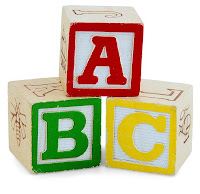
•  Are you having trouble with story arc?  Try the ABC method.

Don’t forget tomorrow we have our chat at 5pm ET! You can always tweet comments or thoughts using the #diymfa hashtag or add your thoughts in the comments.

Also, I’ll be sending the eWorkbook out this weekend so if you haven’t already joined my DIY MFA list, you can register here.  You’ll get the free workbook and be entered for a chance to win an iggilicious journal!

Tweet or comment and tell me how YOU made life difficult for your character today.  And don’t forget to grab a badge after you do your sprint!

4 Comments »

15 Apr

YA Cafe: Is it YA or Not? 5 Ways to Tell

Posted in Uncategorized

Welcome Back to YA Cafe, where book lovers can gather and chat about teen literature.  I’m your barista, along with Ghenet from All About Them Words.

Each Friday we pick from a menu of topics and share our thoughts on our respective blogs.  We’ve also got plans brewing for interviews, events and even some exciting giveaways, so stay tuned!  Join the discussion by responding in the comments, on your own blogs or on twitter using the hash tag #yacafe.

Today’s Special: What makes a story YA?

This is a topic I’ve been struggling with a lot lately.  How do we know if a book is YA or not?  I’ve had countless discussions with other writers on this subject and the conclusion is always the same: YA is hard to define but most readers know it when they see it.  Here are five ways to tell if a book is YA or not.

1) Is the main character a teen?
I can’t think of a single YA book where the protagonist is not a teen.  The only example I can think of is The Book Thief by Markus Zusak, where the main character starts out as a child and is only a teen in the latter part of the novel.  For the most part, if the main character is a teen, then there’s a good chance that the book is YA.

2) Are teens the intended audience?
There are many books that are not YA but have teenage protagonists, for example: J.D. Salinger’s The Catcher in the and Harper Lee’s To Kill a Mockingbird.  While these books may have been embraced by teens, they were first written for an adult audience.  This is why in my mind, these books still fall outside the YA umbrella.  We have to look at the author’s intent; if the author intended to write a book for adults then I’m hard-pressed to label it YA.

3) Does it deal with teen issues?
While not every YA novel is all sex, drugs and rock ‘n roll, they do all have to deal with issues that are important to teens.  Romance and love.  Friendship and betrayal.  Grief and pain.  If the main theme of the novel is not something that matters to teens, then the book is probably not YA.  Most likely, it’s some sort of crossover between YA and either middle grade or adult fiction.

4) Is there hope?
The main theme that differentiates YA from adult fiction is hope.  In fiction for adults, it’s perfectly acceptable to end a book with no hint of hope that things will get better.  Adult readers seem to enjoy books where everyone winds up miserable, but teen readers are less likely to stand for it.  Teens want to see a glimmer of hope on the horizon, even if everything seems to be falling apart.

5) Does it have that YA voice?
Voice is probably the element that best defines YA.  While some books might be about teens or have themes that appeal to teens, if the voice of the narrator doesn’t have that YA quality, it’s hard to think of the book as truly YA.  A vast number of YA novels are also written in first person so we definitely get that teenage voice telling the story.

What do you think?  Which of these elements resonates most with you?  Also, is there anything you’d add to the list? 

Want to read a more about what makes a book YA?  Fellow barista, Ghenet shares her favorites on her blog: All About Them Words.  Check it out, then tell us what you think!

18 Comments »

14 Apr

Outline Techniques for Those Who Hate Outlines

Posted in Creativity, DIY MFA, Process, Writing

This past weekend in #diymfa chat, we had a great discussion about outlines and whether we plotted out our stories in detail or wrote by the seat of our pants.  As you can imagine, the responses were as varied as the number of people in the chat.

This discussion got me thinking about my own writing.  I’m not a seat-of-my-pants writer–not even a little–but I hate traditional outlines.  Something about long lists (I.A, 2.b–it’s all Greek to me) just doesn’t work for my visual brain.  I think it’s my background in design that means those outlines are too logical and sequential for me.  To that end, I wanted to share some plotting devices that have worked better for me.  These techniques help me organize my writing without killing the spontaneity.

Mind Mapping

I give a detailed How-To for this technique in the first DIY MFA.  Unlike traditional techniques, this type of outline forces you to look at a topic from multiple different angles. It also makes it easy for you to see an entire project in one glance, rather than having to read through line-by-line to get a sense of the full story.

How to Apply this to Fiction: Try mind-mapping your story or novel by making each of the main branches as chapter topics or major events in the story.  The sub-branches can be scenes that sub-divide these larger branches.  There are no rules with mind-mapping so feel free to doodle and make notes (I use thought bubbles and speech bubbles to add notes to my mind maps, as you can see in the image.)

Here’s a mind map I used to brainstorm the very first DIY MFA back in September.


Story Maps
I love subway maps.  What can I say, I’m a New Yorker so it’s in my blood.  Recently, I started outlining stories using New York-style subway maps.  Just as subway lines intersect, different subplots weave in and out of the main plot thread in a novel or short story.  I like to think of writing as a journey so to me, this idea of mapping out a story works for me.

How to Apply this to Fiction: The different threads in a story are in different colors.  Scenes in each thread are marked as subway stops.  If a scene applies to more than one story thread, then it becomes an intersection.  What I love about this technique is that when I sit down to write a scene, all I’m writing is a “dot” of the story.  Dot’s aren’t big and scary; they’re cute and round.  They’re just dots for crying out loud.  Somehow in my mind, it seems a lot more manageable.

Tip: If the subway concept doesn’t work for you, think of this as a road map instead.  The main story threads are interstates, subplots are smaller roads and the dots are the stops you make along the way.

Here’s a subway map I designed to use for DIY MFA.

Scene Cards

This technique is super-portable, which is one of the reasons I love it.  Take a stack of index cards and make one card for each scene you know needs to happen in your story.  What’s nice about this technique is that you don’t have to write the scenes in order (you can move the cards around), and you can always add more cards later if you think you need them. 

How to Apply this to Fiction: On each card write the following information.

  •  Scene Title: Something easy to remember like “Scene where Jimmy falls from the tree.”
  • Characters: Who’s in this scene?
  • Events: What happens?
  • Setting: Where are we?
  • Purpose: Why do you need this scene? (Character development? Important plot point? Reveal important information?)  This last one is important because if you can’t think of a purpose for the scene then you have to question whether you need the scene at all.

Some computer programs actually have an index card function built in (Scrivener, for instance) which is nice because it makes editing and moving the cards around even easier.  I still like the old-fashioned method because it means I can grab a handful of cards and take it with me anywhere.

Homework: Choose one technique and try it out. Then tell us about it in the comments or on twitter!

13 Comments »

13 Apr

5 Tips for Keeping Up with Writing and Life

Posted in DIY MFA, Process, Tips

It starts with the best of intentions.  We set big goals.  Thousands of words a day.  Finish a novel in a month.  You name it.  It’s all done with the noblest ideals at heart.  Trouble is, sooner or later we all get burned out.

Today, as we near the midway point of DIY MFA 2.O, I wanted to talk about keeping up: both with DIY MFA itself and with your writing in general.  It’s easy to feel overwhelmed, especially when the goals get big and there’s a lot at stake.  I know.  I’ve been feeling that way myself lately.  Here are some tips that help me when deadlines loom large and the stress monster rears his ugly head.

1) Work in short spurts.  I’ve talked about the Pomodoro app before, but this idea of working for short spurts then taking breaks has worked brilliantly for me.  When I know I only have to focus on something for a short while, it makes it easier to ignore interruptions.  I let the phone go to voicemail.  I let emails sit in my inbox just a little bit longer.  And it’s OK, because it’s only for 25 minutes.

2) Take breaks.  It’s really easy to work through your breaks, especially if your “work time” before that was only a short spurt.  Even so, take a few minutes every hour or so to get up and stretch.  You’ll want to stretch your arms and wrists (to prevent repetitive motion injury) as well as your legs, since writing is so sedentary.  Also if the bulk of your work is done at the computer, take a minute or two to look out the window.  Not only might it give you some writing ideas, but it can help rest your eyes and prevent eye strain.  Most importantly, taking breaks helps you rest your brain.

3) Save some writing for later.  Don’t stop working at a logical stopping point.  If you wrap up your writing day too neatly (at the end of a chapter, or short story) then it’s all that much harder to pick it up the next day.  Instead, try stopping in the middle of a scene or even in the middle of a sentence.  If you’re writing a goal number of words, stop when you hit that goal even if it’s in the middle of a thought.  When you come back the next day you’ll find it that much easier to jump in and keep going.

4) Avoid binging.  As with anything in life, moderation is key.  If you’re starting to feel like you’re going on a writing binge, dial back the intensity.  Better to write 200 words per day for a week, than to write a thousand in an hour and not write for another two weeks.  Remember the fable and aim for slow and steady.

5) One thing at a time. This goes back to the idea of the short spurts and Pomodoro.  One of the reasons that technique works so well is that you focus on one thing at a time for a set number of minutes.  Not only is this good for maintaining focus and efficiency, it also helps maintain sanity.  These days, everyone tries to do eight million things at once.  Talk on the phone while they surf the web and walk across the street.  Check email and work and tweet all at the same time.  I prefer to do one thing mindfully at a time, give it my full focus and when I’m done, I focus on something else.

Bonus DIY MFA Tip: Use Your Idea Bank

I know it can be tough keeping up with all the prompts this time around.  DIY MFA 2.O is not like the first DIY MFA where all you had to do was read the posts and the homework can get overwhelming.  If you can’t get to a prompt, don’t worry.  Just write it on a slip of paper and tuck it away in your Idea Bank.  Just like saving pennies for a rainy day, you’ll be saving writing ideas for when you’re ready to use them.

This week, at our Facebook page, I’ll share pictures of the new Idea Bank I found at a thrift store.  Feel free to share pictures of your own Idea Bank too.  I’d love to see what you come up with.

Homework: Today your homework is to give yourself a break.  It doesn’t have to be a long break–30 minutes will suffice–but it needs to be a break nonetheless.  Do something fun.  Something relaxing.  Something that’s not writing.  This is not optional.  You are not allowed to work and call it “fun.”

When you’re done doing your something fun, please share it in the comments or on twitter!  I’m dying to hear all about it.

6 Comments »

Iggi & Gabi - All rights reserved © 2010-2011

I am a HowJoyful Design by Joy Kelley